
Ecommerce Website Design That Turns Browsers Into Buyers
Your online store shouldn’t just display products. It should sell them. We design and build custom ecommerce websites on Shopify, WooCommerce, BigCommerce, and Magento that are architected around how your customers actually shop, structured for Google and AI search engines, and built to convert traffic into revenue. Not just traffic. Revenue.




100 + happy Clients
We’re trusted by:




Your Ecommerce Store Is Losing Sales Right Now
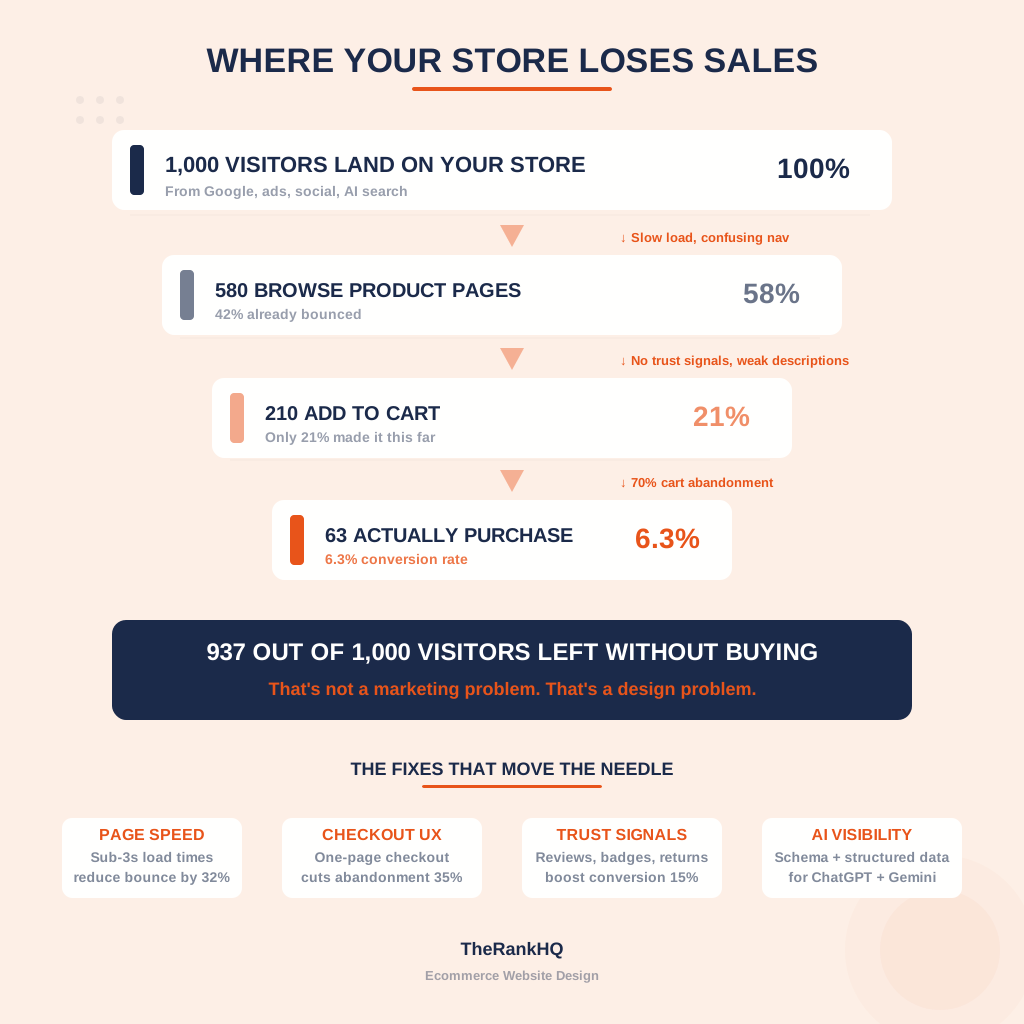
The average cart abandonment rate is 70.19%. That’s not a stat you can ignore. For every 10 people who add a product to their cart on your site, 7 of them leave without buying. And in most cases, the reason isn’t your product. It’s your website.
Slow page loads, cluttered product pages, a checkout flow that asks for too much information, missing trust signals, no guest checkout option. These are design failures, not marketing failures. They’re costing you real money every single day.
Here’s what makes it worse. AI search engines like ChatGPT, Gemini, and Perplexity are now recommending products directly to users. If your product pages don’t have clean structured data, proper schema markup, and content that these platforms can extract and cite, you’re invisible in the fastest-growing discovery channel in ecommerce. Your competitors who figured this out six months ago are already getting product recommendations you’ll never see.
Ecommerce Website Design Services Built for Revenue Growth
An e-commerce website isn’t a single project. It’s a system of interconnected pages, each one designed to move a visitor closer to purchase. Here’s what we build.
Product Page Design and Optimization
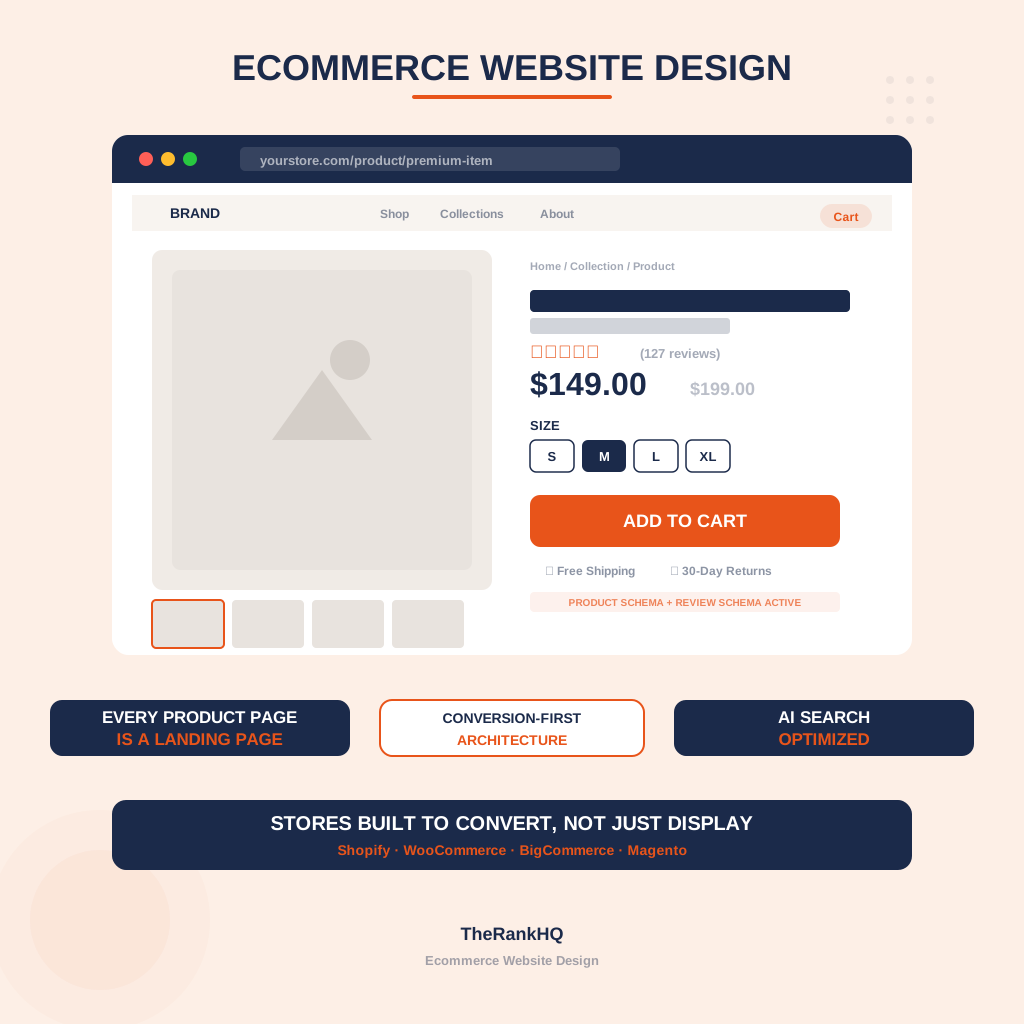
What makes someone click "Add to Cart" instead of hitting the back button? It's not just a good photo. We design product pages with conversion-tested layouts: above-the-fold pricing, benefit-driven descriptions, size guides, review integrations, and trust badges positioned exactly where hesitation happens. Every product page we build functions as its own landing page.
Checkout and Cart Optimization
Design Faster checkouts mean fewer abandoned carts. We strip out unnecessary form fields, build one-page checkout flows, integrate guest checkout, and configure payment options like Shop Pay, Klarna, Affirm, PayPal, and Stripe. The result is a checkout experience that reduces the average 70% abandonment rate to something your revenue actually feels.
Category & Navigation Architecture
We structure your product catalog around how customers browse, not how your warehouse organizes inventory. Faceted navigation, smart filtering, breadcrumbs, collection pages, and product sorting that actually helps people find what they're looking for. Clean category architecture is also how Google crawls and indexes your store, so every structural decision affects both UX and organic search performance.
Mobile Commerce Design
59% of global ecommerce sales happen on mobile devices. We design mobile-first, not mobile-friendly. That means thumb-zone navigation, sticky add-to-cart buttons, swipeable product galleries, fast-loading images, and checkout flows that don't fight small screens. If your mobile conversion rate is lower than desktop, your store has a design problem.
SEO and Structured Data Setup
43% of ecommerce website traffic comes from Google organic search. We build stores with SEO baked into the architecture: clean URL structures, canonical tags for variant pages, product schema, review schema, breadcrumb schema, optimized meta tags for every category and product page, and internal linking structures that distribute authority across your catalog. This isn't an add-on. It's part of every build.
Integrations and System Connections
When your store needs to talk to your ERP, PIM, CRM, email marketing platform, or fulfillment system, we make it happen. We connect platforms like NetSuite, SAP, HubSpot, Klaviyo, ShipStation, and custom APIs so product data, inventory levels, order details, and customer records stay in sync without manual work.
Ecommerce Platforms We Design and Develop On
We’re not locked into one platform. Your catalog size, growth plan, integration needs, and budget determine which one we recommend. Here’s where we build.
Custom theme development on Online Store 2.0 with Liquid, app integrations, checkout extensions, and Shop Pay. Best for DTC brands, mid-market stores, and businesses that want a managed hosting environment with built-in payment processing.
Full control over every pixel and every function. Custom theme builds, plugin configuration, WooCommerce extensions, and REST API integrations. Best for businesses that need deep customization, complex product structures, or tight CRM and ERP.
Professional store setup with Wix Studio, custom design beyond default templates, Wix Stores configuration, payment and shipping setup, and SEO optimization that most DIY Wix builds miss. Best for small businesses and service providers who want an online store without the complexity of WordPress or Shopify.
Magento (Adobe Commerce)
Enterprise-grade architecture for complex catalogs, multi-language storefronts, advanced pricing rules, and heavy ERP integrations. Best for high-volume retailers and B2B operations that need full backend control at scale.
Custom Ecommerce Website vs. Template vs. DIY: What's the Right Fit?
We’re a Shopify web design agency, but we won’t force you onto a platform that doesn’t fit. If you’re still weighing options, here’s an honest comparison based on hundreds of ecommerce projects we’ve delivered.
| Feature | Custom Build (TheRankHQ) | Template-Based | DIY Platform |
|---|---|---|---|
| Design uniqueness | 100% custom to your brand | Limited customization | Minimal (shared layouts) |
| Conversion optimization | Built into every page | Not included | Not included |
| Product schema and structured data | Full implementation | Basic or none | Basic auto-generated |
| AI search visibility | Optimized for ChatGPT, Gemini, Google AI | Not addressed | Not addressed |
| Mobile-first design | Custom responsive for your catalog | Responsive template | Template responsive |
| Checkout customization | Full control (one-page, guest, BNPL) | Limited by template | Platform defaults |
| ERP/CRM/PIM integrations | Custom development | Plugin-dependent | Limited app ecosystem |
| SEO architecture | Custom URL structure, canonicals, internal linking | Template defaults | Platform defaults |
| Ongoing scalability | Built for growth from day one | Requires rebuild at scale | Platform ceiling |
| Typical investment | $5,000 to $25,000+ | $1,500 to $5,000 | $29 to $300/month + time |
| Timeline | 6 to 12 weeks | 2 to 4 weeks | Days to weeks |
A template store gets you selling fast. A custom build gets you selling more. If your revenue depends on your website (and for ecommerce, it always does), the custom investment pays for itself within the first few months of improved conversion rates.
How We Build Ecommerce Websites That Sell
Most agencies show you a pretty homepage and call it done. We build stores from the inside out, starting with your customers’ buying behavior and ending with a site that’s optimized for every platform where people discover products, from Google to ChatGPT to Instagram. Here’s what happens behind the curtain.
- Discovery & Analysis
- UX Design & Architecture
- Design and Brand
- Website Development
- SEO & Structured Data
- QA & Testing
- Launch & Support
Understanding Your Business Before We Touch a Wireframe
We start by studying your product catalog, your customers, and your competitors. Not surface-level browsing. Real analysis. We review your current analytics (if you have them), audit your existing store’s conversion funnel, map out where customers drop off, and document what your top 5 competitors do well and where they fall short. We also analyze your product data structure, because how your products are organized in your backend directly affects how they’re displayed, filtered, and found by search engines.
- Audit current conversion rates, traffic sources, and revenue per product category
- Map the complete customer journey from discovery to post-purchase
- Analyze competitor stores for UX, checkout, and content gaps
- Review product data architecture and taxonomy
- Identify which ecommerce platform fits your catalog size, growth plan, and budget
Designing for How People Actually Buy
Wireframes and prototypes come next. We design clickable prototypes in Figma that map every user flow: homepage to product, category browsing to checkout, blog to purchase, email to cart. Every layout decision is backed by ecommerce UX data. Where trust signals sit. How many product images are optimal before scroll fatigue. Whether a cart drawer or a full cart page converts better for your average order value.
- Build wireframes for homepage, category, product, cart, and checkout pages
- Create mobile-first prototypes with thumb-zone navigation
- Design conversion paths for different buyer types (browsers, comparison shoppers, ready-to-buy)
- Plan upsell and cross-sell placement based on AOV data
- Map out AI-extractable content zones for product descriptions and FAQs
Making Your Store Look Like Your Brand, Not a Template
We design your store’s visual identity around your brand, not around a theme’s limitations. Custom typography, color systems, product photography guidelines, and iconography that carry through from homepage to checkout confirmation. Every visual element serves a purpose: building trust, creating urgency, or removing friction.
- Design custom homepage, category, and product page layouts
- Create consistent visual language across all page templates
- Build responsive designs tested at every breakpoint
- Design custom icons, buttons, and micro-interactions
- Ensure brand consistency across mobile, tablet, and desktop
Clean Code on the Right Platform
We build on whichever platform fits your business: Shopify, WooCommerce, BigCommerce, or Magento. Custom theme development, not template tweaks. Every section is modular so your team can manage content without calling a developer. We handle payment gateway configuration, shipping rules, tax automation, and app/plugin integration during this phase, not as afterthoughts.
- Develop custom theme using platform-native code (Liquid, PHP, or headless)
- Configure payment gateways, shipping calculators, and tax automation
- Integrate third-party apps, ERPs, CRMs, and fulfillment systems
- Build admin training documentation for your team
- Set up staging environment for testing before anything goes live
Making Your Products Findable Everywhere People Search
Product descriptions, category copy, meta tags, image alt text, and schema markup. We handle all of it. Every product page gets Product schema. Every review section gets Review schema. Every FAQ gets FAQ schema. We also write product descriptions that work for both human shoppers and AI search engines, because a product page that reads well to a person in ChatGPT is a product page that gets recommended. This is where we connect your store to your broader search engine optimization strategy.
- Write and optimize product descriptions, category copy, and meta tags
- Implement Product, Review, FAQ, Breadcrumb, and Organization schema
- Configure canonical tags, hreflang (for international stores), and URL structures
- Optimize images for speed without sacrificing quality
- Build internal linking architecture that distributes authority across your catalog
Breaking Your Store Before Your Customers Do
Before launch, we run your store through the gauntlet. Cross-browser testing on Chrome, Safari, Firefox, and Edge. Mobile testing on iOS and Android. Load testing to simulate traffic spikes. Core Web Vitals optimization to hit green scores. ADA compliance checks for accessibility. PCI-DSS alignment for secure checkout. We also run real-prompt testing on ChatGPT, Gemini, and Perplexity to verify your products are discoverable in AI search results.
- Test across all browsers, devices, and screen sizes
- Optimize Core Web Vitals (LCP, FID, CLS) for sub-3-second load times
- Run ADA/WCAG accessibility audit
- Verify payment processing, shipping calculations, and tax rules
- Test AI search visibility with real product-related prompts
Going Live Is Step One, Not the Finish Line
Launch day includes DNS migration, 301 redirects (if migrating from an old store), Google Search Console setup, analytics configuration, and conversion tracking. After launch, we monitor performance weekly for the first 30 days, tracking conversion rates, page speed, cart abandonment, and search rankings. We make iterative improvements based on real user data, not guesses.
- Execute pre-launch checklist including redirects, SSL, and sitemap submission
- Configure Google Analytics 4, Search Console, and conversion tracking
- Monitor performance metrics daily for the first two weeks
- Run A/B tests on product pages and checkout within 30 days
- Provide ongoing maintenance and optimization support
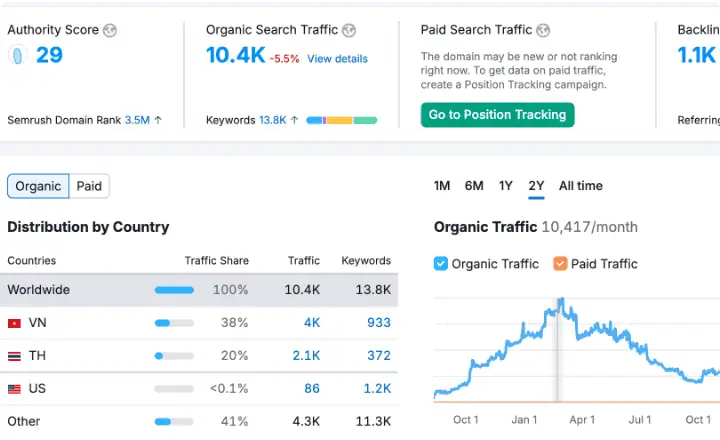
Real Ecommerce Results, Not Just Pretty Mockups
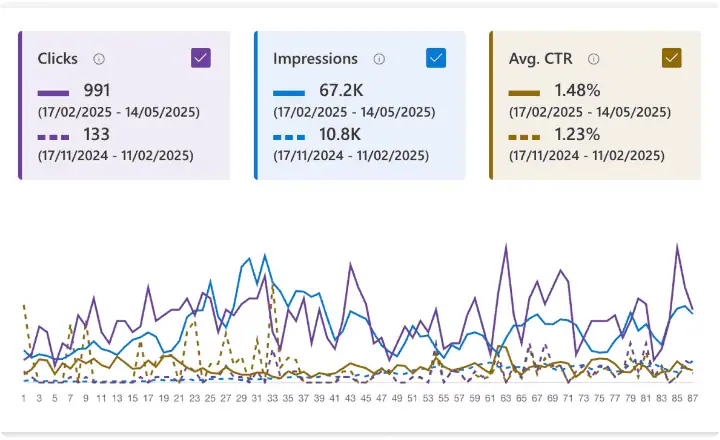
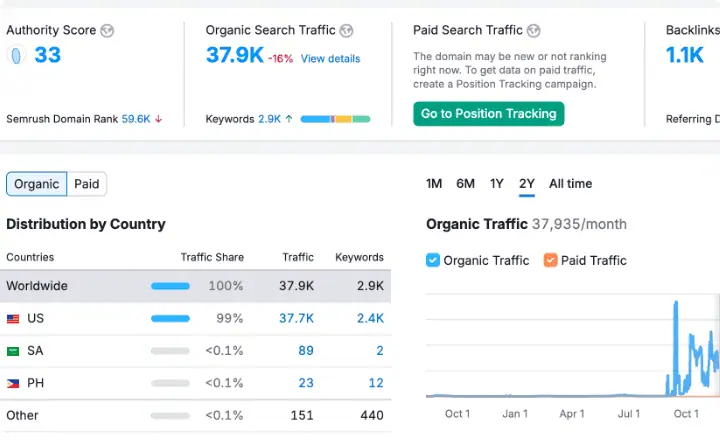
The test of a good e-commerce website isn’t how it looks in a portfolio. It’s how it performs in the market. Here’s what happened when we applied our design and SEO methodology to real businesses.
Your Store Should Be Selling More. Let's Fix That
We build ecommerce websites that convert visitors into customers, not just impressions into bounces. And with our project-based pricing, you know exactly what you’re investing before we write a single line of code.
Why Ecommerce Website Design Is the Highest-ROI Investment You'll Make This Year
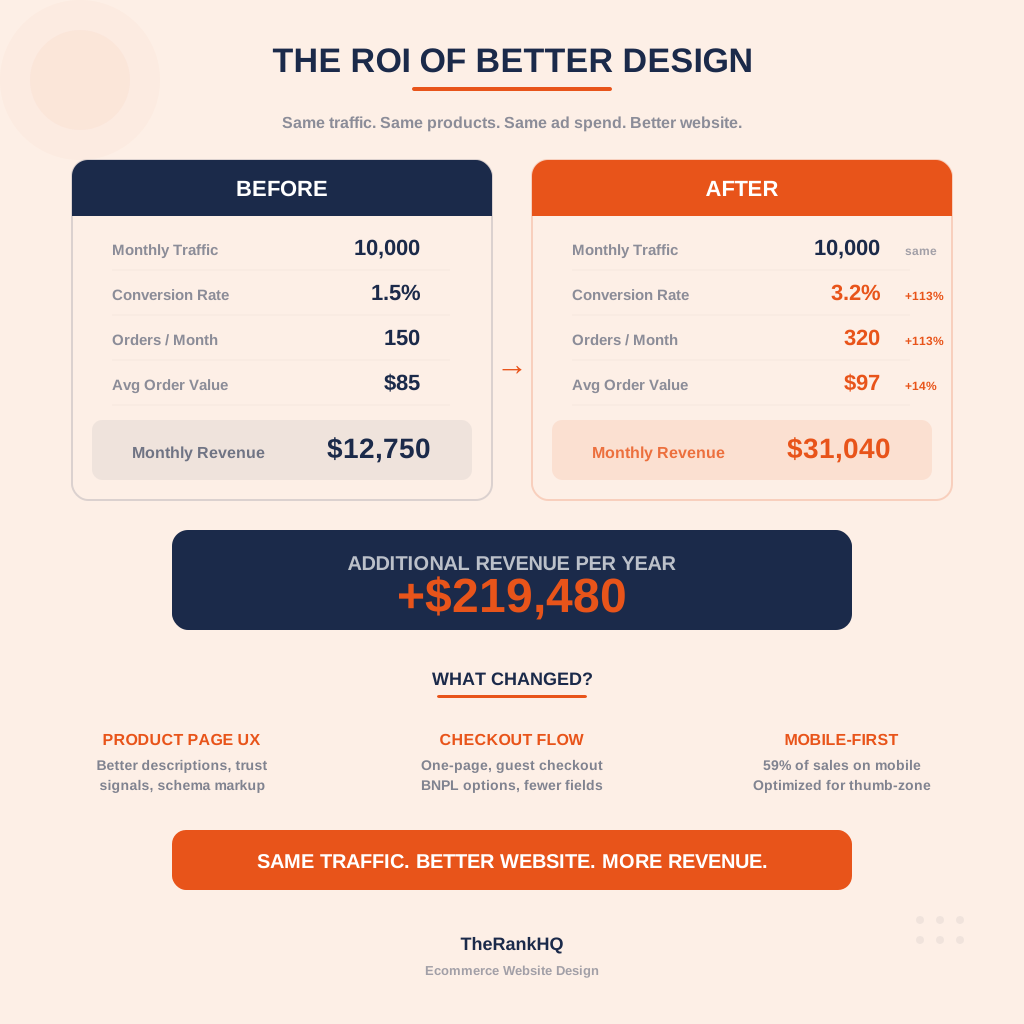
Global ecommerce sales hit $6.88 trillion in 2026. That’s 21.1% of all retail sales worldwide, and the share keeps growing. The businesses capturing that revenue aren’t the ones with the most ad spend. They’re the ones with stores that convert. A 1% improvement in conversion rate on a store doing $50,000/month in revenue is an extra $6,000 a year. A 2% improvement is $12,000. That’s from the same traffic you’re already getting.
The cost of not investing is equally clear. Every day your store runs with a clunky checkout, missing product schema, or a mobile experience that frustrates shoppers, you’re leaking revenue to competitors whose stores were designed to catch exactly those customers. And now that AI search platforms are recommending products directly, stores without structured data and clean content architecture are losing a discovery channel they didn’t even know existed.
How Much Does Shopify Website Design Cost?
At TheRankHQ, we use project-based pricing. You get a detailed scope document before we start, with exact deliverables and timelines. No hourly billing surprises. No retainer creep. The scope defines the cost, and we stick to it. We also build SEO and AI search optimization into every project, not as an upsell. Your product pages will be structured for Google, ChatGPT, and Gemini from day one.
Ecommerce website design costs vary based on your catalog size, platform choice, integration requirements, and the level of custom functionality you need. Industry-wide, most professional ecommerce builds fall between $5,000 and $25,000 for small to mid-sized stores. Enterprise stores with complex integrations, custom development, and large product catalogs can run $25,000 to $75,000 or more.
Ecommerce Platforms We Build On
We’re not locked into one platform. Your business needs, product catalog size, growth trajectory, and budget determine which platform we recommend. We’ve built stores on all of them and know exactly where each one shines and where it struggles.
Get Your Products Found on AI Search Engines
We build ecommerce stores that don’t just rank on Google. They get cited and recommended by AI-powered search platforms. Your product data, descriptions, and schema markup are structured so ChatGPT, Gemini, Perplexity, Claude, and Google AI Overviews can extract, understand, and recommend your products when shoppers ask questions like “best running shoes under $150” or “what’s the most reliable espresso machine?”
Why Choose TheRankHQ for Ecommerce Website Design?
Dozens of agencies build online stores. Here’s why our clients choose us over the rest.
Conversion-First Design
We don't start with colors and fonts. We start with your customer's buying behavior, map every decision point on every page, then design around that data. The result is a store that sells, not just a store that looks good in a portfolio.
Custom-Built, Not Templated
Every store we build is designed from scratch for your brand, your products, and your audience. No pre-made themes reskinned with your logo. No shared layouts that make your store look like a thousand others. Custom code, custom UX, custom everything.
Mobile-First Design
59% of ecommerce sales happen on phones. We design for mobile first, then scale up to desktop. Thumb-zone navigation, sticky cart buttons, swipeable galleries, and checkout flows that don't fight small screens. Your mobile conversion rate will prove the difference.
Project-Based Pricing
No hourly billing. No retainer surprises. You get a detailed scope document with line-item costs, delivery milestones, and a timeline you can hold us to. What we quote is what you pay. The scope defines the investment before we write a single line of code.
Platform-Agnostic Advice
We don't push one platform because of a partnership deal. We recommend Shopify, WooCommerce, Wix, or Magento based on your catalog, your budget, and your growth plan. You get honest advice, not a sales pitch for someone else's software.
Post-Launch Optimization
Launch day isn't the finish line. We monitor your store's performance for 30 days, run A/B tests on product pages and checkout flows, and make data-backed improvements. You get monthly reports tracking conversion rate, page speed, and revenue impact.
Ecommerce Website Design Myths That Cost Store Owners Money
We hear these on nearly every discovery call. Some come from agencies that oversimplify. Some come from DIY platform marketing. All of them lead to bad decisions if you believe them.
Shopify is always the best platform for ecommerce.
Shopify is excellent for many stores, but it’s not universally the best fit. Businesses with complex B2B requirements, large catalogs with heavy customization needs, or tight integration with existing ERP systems often perform better on WooCommerce, BigCommerce, or Magento. Platform choice should follow business requirements, not marketing hype.
I can just use a free template and customize it myself.
You can. And you’ll end up with a store that looks like every other store using that template. Templates cap your conversion rate because they’re designed for everyone, which means they’re optimized for no one. If your store does under $5,000/month, a template might be fine for now. Beyond that, the revenue you’re leaving on the table exceeds what a custom build costs.
SEO is something you do after the website is built.
This is the most expensive myth in ecommerce. Retroactively fixing URL structures, adding schema markup, rewriting product descriptions, and restructuring categories costs two to three times more than building it right the first time. SEO architecture decisions made during design affect your search visibility for years.
My website doesn't need to work with AI search engines.
ChatGPT, Gemini, and Perplexity are already recommending products to millions of users. If your store’s product pages don’t have structured data and content these platforms can extract, you’re not part of the conversation. This isn’t a future trend. It’s happening right now, and the stores that get structured for it first will own this channel.
What Our Clients Say About Working With Us
Real feedback from businesses that trusted us with their ecommerce projects and web design.



FAQs About Ecommerce Website Design
Common questions from store owners who are considering a custom ecommerce build. If yours isn’t here, ask us directly during your free strategy call.
Professional ecommerce website design typically ranges from $5,000 to $25,000 for small to mid-sized stores. The price depends on your product catalog size, platform choice, custom functionality, and integration requirements. Enterprise stores with complex ERP and PIM integrations can run $25,000 to $75,000 or more. We provide detailed project-based quotes after a free discovery call.
It depends on your catalog size, budget, technical requirements, and growth plan. Shopify works well for most DTC brands and small to mid-sized stores. WooCommerce is ideal if you want full control and already use WordPress. BigCommerce suits mid-market stores with complex catalog needs. Magento is built for enterprise-level operations. We recommend based on your business, not platform partnerships.
Every store we build includes SEO architecture as part of the development process, not as an add-on. This includes clean URL structures, product and review schema markup, canonical tags for variant pages, optimized meta tags, internal linking, and image optimization. We also structure content for AI search extraction on ChatGPT and Gemini.
Yes. We handle full website redesigns for existing stores, including platform migrations from Shopify to WooCommerce or vice versa. We plan for SEO-safe transitions with 301 redirects, URL mapping, metadata preservation, and analytics parity so your rankings hold or improve during the switch. Most redesigns see measurable conversion improvements within 30 to 60 days of launch.
Templates are pre-built layouts shared by thousands of stores. Custom design means every page is built around your brand, your products, and your conversion data. Templates cap your conversion rate because they're designed generically. Custom builds let you optimize product pages, checkout flows, and navigation for your specific customers and buying patterns.
Yes. Post-launch support includes performance monitoring, bug fixes, content updates, security patches, and conversion optimization. We track your store's conversion rate, page speed, and cart abandonment rate weekly for the first 30 days, then transition to monthly maintenance with detailed reports. Support plans are flexible and scale based on your store's needs. You'll never be left with a website and no one to call.
We map your existing product data (titles, descriptions, images, variants, categories, reviews) and migrate it to the new platform with zero data loss. This includes cleaning up product taxonomy, consolidating duplicate SKUs, and optimizing product descriptions during the migration. All SEO metadata is preserved through 301 redirects, canonical configuration, and post-migration validation in Search Console.
Absolutely. We connect ecommerce stores with ERPs (NetSuite, SAP, Dynamics), CRMs (HubSpot, Salesforce), email platforms (Klaviyo, Mailchimp), fulfillment services (ShipStation, 3PLs), and accounting software (QuickBooks, Xero). Custom API integrations are handled during the development phase so everything is tested and working before launch day. No post-launch scrambling to connect your systems.
Yes. We build product pages with structured data and content architecture specifically designed for AI search extraction. This means when someone asks ChatGPT or Gemini for product recommendations in your category, your products have the structured data and content depth to be cited. Most ecommerce SEO agencies and design agencies don't offer this yet.
We build dual-audience stores with account-based access, tiered pricing, wholesale ordering, quote request workflows, and separate checkout experiences for B2B and B2C customers. The frontend looks clean and unified while the backend handles the complexity. This includes minimum order quantities for wholesale buyers, custom catalogs per account, and different shipping rules for each customer type.
We track conversion rate, average order value, cart abandonment rate, bounce rate, page speed scores, organic traffic, and keyword rankings before and after launch. You'll get a baseline report during discovery and monthly performance reports post-launch comparing every metric against your pre-launch numbers, so every improvement is measurable and documented. No vague claims about "better performance."
Stop Losing Sales to a Store That Wasn't Built to Sell
We’ve driven 13.8K+ keyword rankings, 37.9K+ monthly visits, and 745% search click growth for our clients. Your ecommerce store deserves the same treatment. And with project-based pricing, you know exactly what you’re investing before the first wireframe.