
Shopify Website Design That Sells Products and Ranks
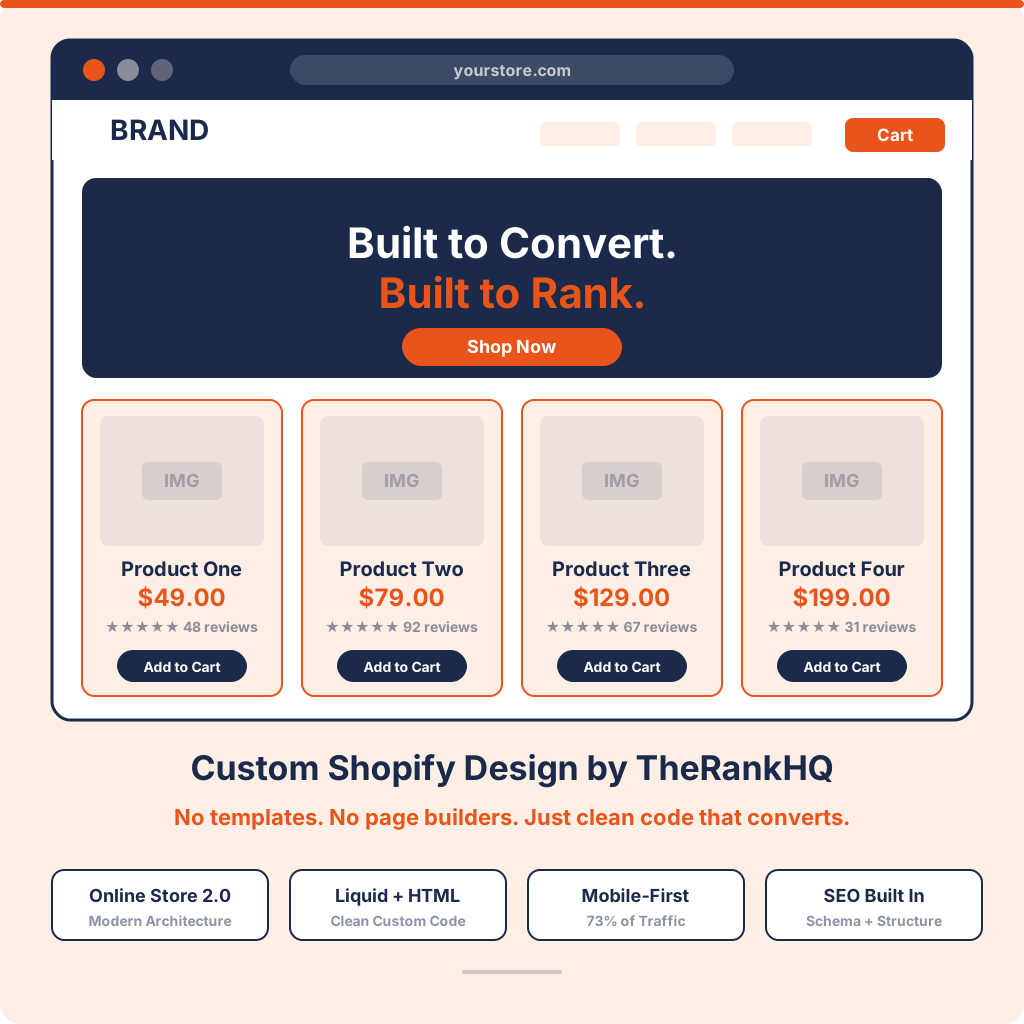
We design and build Shopify stores that do two things most agencies ignore: convert browsers into buyers and show up across Google, ChatGPT, and Gemini. Custom themes, product page architecture, checkout optimization, and search visibility are baked into every build. Not bolted on after launch.




100 + happy Clients
We’re trusted by:




Most Shopify Stores Look the Same. And Sell Like It
Search for any product category on Shopify and you’ll notice something: the top stores all run the same four or five themes. Dawn, Ride, Impulse, Prestige. Same layouts, same product card grids, same predictable checkout flows. Customers don’t remember these stores. They just buy from whichever one shows up first.
That’s not a design problem. That’s a revenue problem. When your store looks identical to fifty competitors, you’re competing on price alone. And when your Shopify site isn’t structured for organic search or AI search engines, you’re paying for every single visitor through ads. The stores pulling ahead right now aren’t just pretty. They’re built around conversion-tested product page architecture, schema markup that feeds Google’s AI Overviews, and content structures that ChatGPT and Gemini can actually cite.
Shopify Website Design Services for Ecommerce Growth
Every Shopify store we build starts with a question: what does the customer need to see, feel, and trust before they hit “Add to Cart”? That answer changes by product, price point, and audience. Here’s what we deliver to get you there.
Custom Shopify Theme Design
We build custom themes from scratch using Liquid and Online Store 2.0 architecture. No recycled Dawn templates with a logo swap. Every layout, every section, every interaction is designed around your product catalog and customer behavior. The result is a store that looks like yours, not everyone else's.
Product Page UX & Conversion
Design We structure product pages around the psychology of buying online: trust signals above the fold, lifestyle imagery mixed with specs, variant selectors that don't confuse, and review placement that reduces purchase hesitation. Stores with optimized product page UX consistently see 15-40% higher conversion rates than template defaults.
Checkout & Cart Optimization
Checkout abandonment is the silent killer of Shopify revenue. We configure Shopify's checkout flow for speed and simplicity: Shop Pay integration, express checkout options, trust badges at the payment step, and upsell placements that increase average order value without adding friction. If you're on Shopify Plus, we build custom Checkout Extensions.
On-Page SEO & Schema Setup
A great-looking store that nobody finds is just an expensive brochure. We build SEO into the architecture during development, not after: clean URL structures, product schema markup, collection page hierarchy, internal linking between related products, and meta tag templates that scale with your catalog.
Shopify Migration & Store Redesign
Migrations and redesigns are half of what we do. Whether you're moving from WooCommerce, Magento, or BigCommerce, or you've outgrown your current Shopify theme, we handle the full transition: data migration, 301 redirects, SEO preservation, and a fresh design built for where your business is heading, not where it's been.
Mobile-First Shopify Development
We design mobile-first, not mobile-responsive. There's a difference. Mobile-first means the phone experience is designed before the desktop layout. Touch targets, thumb-zone navigation, swipe-friendly product galleries, and fast load times on cellular connections. Your customers are shopping on their phones. Your store should feel like it was built for that.
Shopify Stores We Build, by Business Type
Shopify works for a coffee subscription startup and a $50M wholesale distributor. But the store each one needs looks completely different. We’ve built Shopify stores across eight distinct business models, and the approach changes every time.
Custom-branded storefronts for direct-to-consumer brands selling their own products. Design focus: storytelling, brand immersion, lifestyle photography integration.
DTC & Brand-First Stores
Stores with 500+ SKUs that need smart filtering, collection architecture, and search functionality so customers find what they need in under three clicks.
Multi-Product Catalogs
Subscription box brands and membership sites built with Shopify’s native subscription APIs or apps like Recharge. Billing UX, account portals, and retention flows included
Subscription & Recurring
Shopify Plus stores with separate wholesale channels, tiered pricing, custom catalogs, and net-terms payment options running alongside a consumer-facing storefront.
B2B & Wholesale
Lean stores integrated with fulfillment partners. Design focus: fast product page loads, supplier inventory sync, and trust-building elements that offset the lack of physical inventory photos.
Dropshipping & Print-on-Demand
Focused, high-conversion stores built around one hero product or a product launch. Every element on the page exists to remove objections and drive the sale.
Single-Product & Launch Stores
Stores using Shopify Markets for cross-border selling: localized storefronts, currency conversion, duties and taxes at checkout, and language-specific content.
International & Multi-Currency
Retailers selling online and in-store. Shopify POS integration, unified inventory management, and a web experience that matches the physical brand.
Omnichannel & POS-Integrated
Shopify vs WordPress vs Wix: Which Platform Should You Build On?
We’re a Shopify web design agency, but we won’t force you onto a platform that doesn’t fit. If you’re still weighing options, here’s an honest comparison based on hundreds of ecommerce projects we’ve delivered.
| Factor | Shopify | WordPress + WooCommerce | Wix |
|---|---|---|---|
| Ecommerce features | Built-in, enterprise-grade | Plugin-dependent, flexible | Basic, limited scaling |
| Ease of management | Low maintenance, hosted | Requires updates, hosting, security | Very easy, limited control |
| Customization depth | Liquid templates, Online Store 2.0 | Unlimited (open source) | Constrained by builder |
| SEO capability | Strong with proper setup | Strongest (full control) | Adequate for small stores |
| Speed & performance | Consistently fast (CDN included) | Depends on hosting/plugins | Generally fast, some bloat |
| Scalability | Handles high volume natively | Needs infrastructure planning | Limited at scale |
| Total cost of ownership | $39-$2,300/mo + design | Hosting + plugins + maintenance | $17-$159/mo + design |
| Best for | Dedicated ecommerce, DTC, growing brands | Content-heavy sites with commerce | Small stores, simple catalogs |
If ecommerce is your core business, Shopify wins on reliability, built-in features, and total cost of ownership. If you need a content-heavy site with a commerce component, WordPress is the stronger choice. If you need something simple and fast with a small product catalog, Wix handles that well.
We build on all three. The right answer depends on your catalog size, growth plans, and how much control you want over the technical stack.
How We Design and Build Shopify Stores
We’ve refined this process across dozens of ecommerce builds. Six phases, each with specific deliverables. No ambiguity about what happens when.
- Store Architecture
- UX & Conversion Design
- Theme Development
- Product & Content Setup
- QA & Launch
- Post-Launch & Support
Store Strategy & Product Architecture
Before we design a single page, we map your product catalog, customer segments, and revenue goals into a store architecture that makes sense. This phase prevents the most expensive mistake in Shopify development: building a beautiful store with a confusing product structure.
- Audit your existing store (if migrating) or competitive market for new builds
- Map product categories into Shopify collections and sub-collections
- Define the customer journey from landing page to checkout for each buyer persona
- Identify cross-sell and upsell opportunities within the product architecture
- Document technical requirements: payment gateways, shipping rules, tax configuration, app integrations
UX Design & Conversion Planning
This is where the store’s revenue potential is either built or broken. We wireframe every page type against conversion principles, not just visual preferences. Product pages, collection pages, the cart, checkout: each gets its own UX treatment.
- Create wireframes for homepage, product pages, collection pages, cart, and checkout in Figma
- Design trust signal placement: reviews, guarantees, payment badges, shipping info above the fold
- Plan mobile-first navigation with thumb-zone heat mapping
- Map urgency and scarcity elements (stock counters, limited-time offers) for appropriate product types
- Present interactive prototypes for your approval before development begins
Custom Shopify Theme Development
We build on Shopify’s Online Store 2.0 framework using Liquid, HTML, CSS, and JavaScript. No page builder plugins. No theme dependency. Your store’s code is clean, fast, and fully owned by you.
- Develop custom Liquid templates for each page type (home, product, collection, blog, contact)
- Configure Shopify Sections and Blocks for drag-and-drop content management by your team
- Build dynamic Metafield displays for specifications, ingredients, materials, or custom product data
- Integrate required Shopify apps: reviews (Judge.me, Loox), email (Klaviyo), analytics (GA4, server-side)
- Set up Shopify Markets for multi-currency and international selling if needed
Product SEO, Schema & Content Setup
A Shopify store without SEO is a store that depends on paid traffic forever. We build search visibility into the code so your organic traffic compounds over time, across both Google and AI search engines.
- Implement product schema, collection schema, and Organization markup
- Write meta title and description templates that scale across your catalog
- Structure FAQ content on product and collection pages for AI citation extraction
- Optimize image alt text, file names, and lazy loading for Core Web Vitals
- Set up blog architecture for content-driven SEO and topical authority
QA Testing, Speed Optimization & Launch
We don’t launch until the store passes our 50-point QA checklist. Every page, every device, every browser. Speed optimization isn’t an afterthought; it’s a launch requirement.
- Test across Chrome, Safari, Firefox, Edge, iOS Safari, and Android Chrome
- Run Lighthouse audits targeting 90+ scores on performance, accessibility, and SEO
- Validate checkout flow end-to-end: add to cart, discount codes, shipping calculation, payment processing
- Execute 301 redirect mapping if migrating from another platform (zero ranking loss)
- Deploy to production with DNS configuration and SSL verification
Post-Launch Support & Growth Optimization
Launch day isn’t the finish line. It’s the starting point. We monitor your store’s performance for the first 30 days, train your team on Shopify’s CMS, and set up the analytics you need to make informed decisions about what to test next.
- Provide CMS training for your team: product management, collection updates, blog publishing
- Monitor Core Web Vitals, uptime, and checkout completion rates for 30 days post-launch
- Set up conversion tracking in GA4, Shopify Analytics, and any paid media platforms
- Deliver a 30-day performance report with recommendations for first optimization cycle
- Transition to ongoing support or ecommerce SEO retainer if needed
Shopify Stores That Rank and Sell
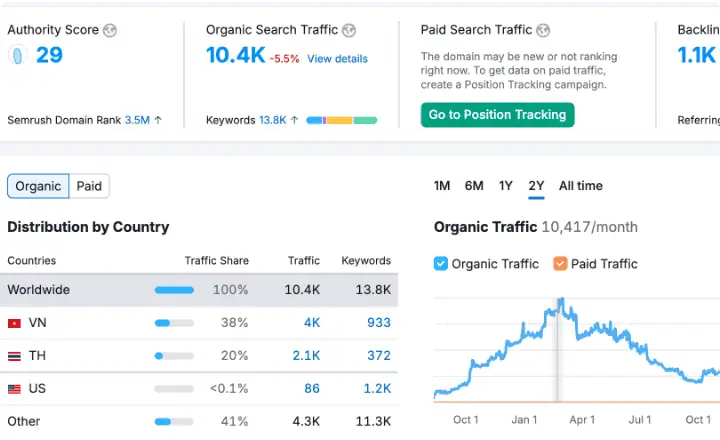
Process documentation is one thing. Revenue is another. Here’s what happened for three businesses after we built and optimized their ecommerce presence.
Your Shopify Store Should Sell While You Sleep. Let's Build It
Tell us about your store goals in a free 30-minute strategy call. No pitch decks. Just a plan
Why Professional Shopify Website Design Pays for Itself
Shopify powers over 4.8 million stores worldwide. That’s also 4.8 million competitors fighting for the same customers. The stores that grow aren’t the ones with the lowest prices. They’re the ones that converted more visitors per dollar of ad spend and showed up organically where competitors paid.
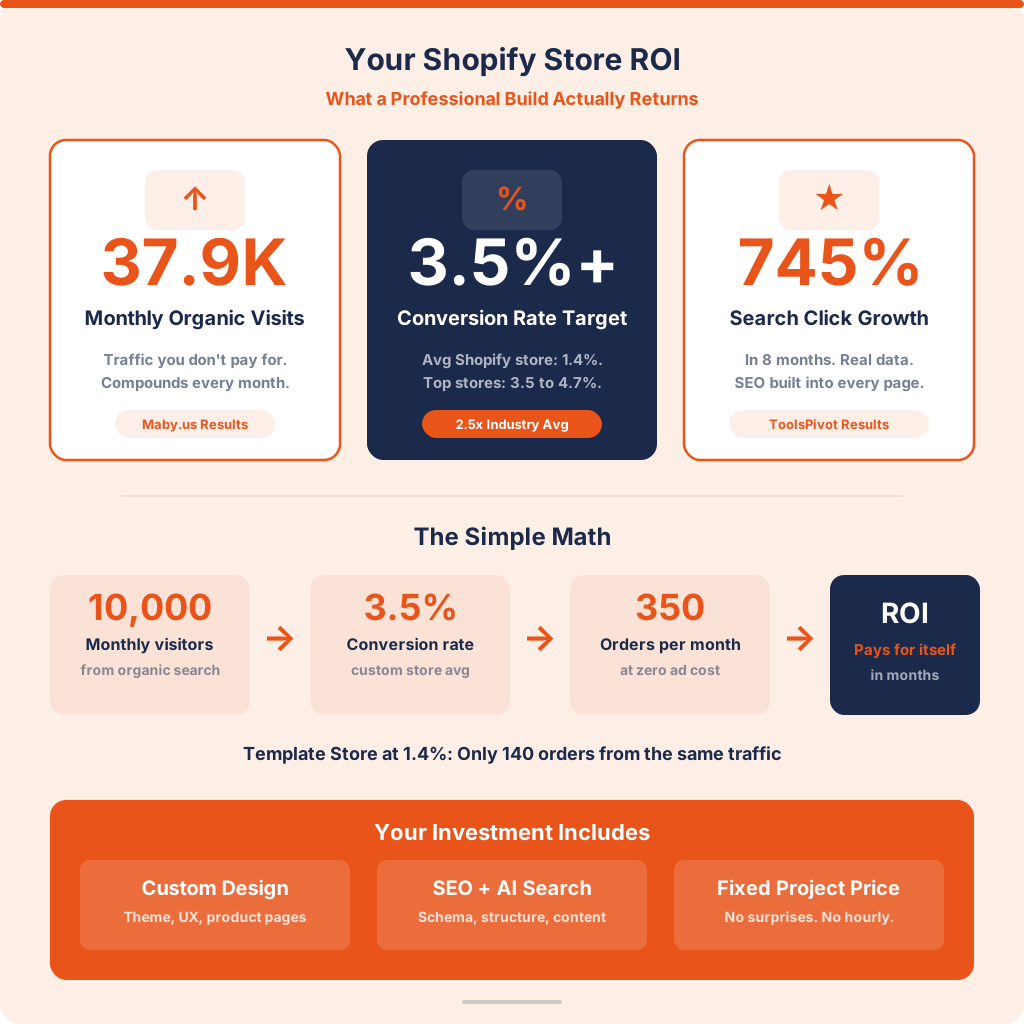
A professionally designed Shopify store with product page SEO, schema markup, and AI search optimization turns your storefront into a compounding asset. Every month it’s live, it builds organic traffic you don’t have to pay for. Every product page structured for search becomes a landing page that works 24/7. And with our project-based pricing, you know exactly what you’re investing before we write a single line of Liquid code.
Get Your Shopify Store Found on AI Search Engines
We don’t just build Shopify stores that rank on Google. We structure product content, FAQ sections, and schema markup so your store shows up when customers ask ChatGPT, Gemini, Perplexity, or Google AI Overview for product recommendations.
Platforms We've Built and Optimized
Shopify is our specialty for ecommerce, but we’re not a one-platform shop. We build across WordPress, Wix, Webflow, and Squarespace depending on what the project actually needs.
Why Choose TheRankHQ as Your Shopify Web Design Agency?
There are hundreds of Shopify agencies. Most of them will build you a nice-looking store. Here’s what separates our approach from the rest of our web design capabilities.
SEO Built In
Not Within Them We don't hand off a beautiful store and wish you luck with traffic. Product schema, clean URL structures, collection page hierarchy, and AI-optimized content architecture are part of every Shopify project. Not a separate invoice.
Zero Legacy Theme Debt
We build exclusively on Shopify's modern architecture. That means Sections and Blocks your team can actually edit, Metafield-powered product data, and clean Liquid code without page builder bloat. No legacy themes. No technical debt.
AI Search Visibility
Most Shopify agencies have never heard of generative engine optimization. We structure product pages, FAQ content, and structured data so your store gets cited by ChatGPT, Gemini, and Perplexity when customers search for what you sell.
Fixed Price. No Surprises.
No retainers, no hourly estimates that balloon. We scope the project, quote a fixed price, and deliver. You know what you're paying before we start.
Proven Store Performance
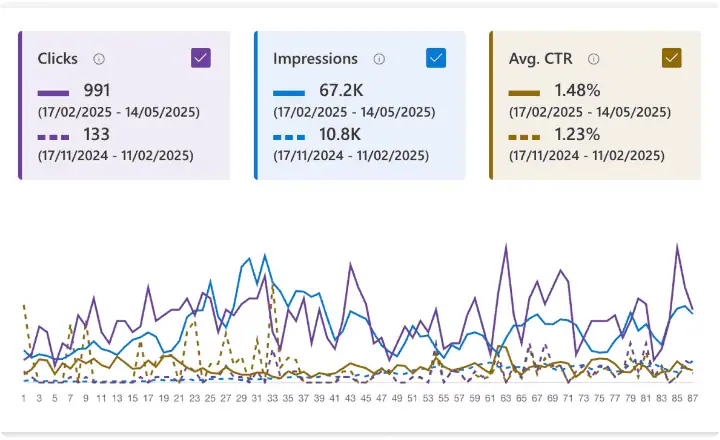
We've driven 745% search click growth, ranked stores for thousands of keywords, and generated tens of thousands of monthly organic visits. Not vanity traffic. Revenue-driving sessions from buyers actively searching for products.
Full Code Ownership
When we hand off your Shopify store, you own everything. Custom theme code, design assets, configuration documentation. No lock-in. No dependency. If you ever want to switch agencies, you walk away with the full codebase.
How Much Does Shopify Website Design Cost?
Most agencies charge between $5,000 and $50,000+ for a custom Shopify store. That range is wide because "Shopify website design" can mean a $500 theme tweak or a 200-SKU enterprise build with custom checkout extensions, B2B wholesale channels, and multi-currency storefronts. What drives the price: product count, design complexity, custom functionality (subscription flows, configurators, portals), app integrations, and whether you're migrating from another platform.
We'd rather set clear expectations now than waste your time with a discovery call that ends in sticker shock. Here's what the market looks like.
Our Shopify projects are custom-scoped and fixed-price. We quote based on your actual requirements after reviewing your product catalog, design goals, and technical needs. No hourly billing surprises. No scope creep invoices.
Shopify Web Design Myths We Hear Every Week
We get these objections on almost every discovery call. Some come from bad experiences with other agencies. Some come from outdated blog posts. Here’s what’s actually true.
Myth 1: "Shopify sites can't rank on Google."
Truth: Shopify’s SEO limitations are real but fixable. The platform generates duplicate URLs for products in collections and has a rigid URL structure. But with proper canonical tags, clean collection architecture, and structured data implementation, Shopify stores rank just as well as WordPress sites. We’ve built stores that rank for thousands of keywords. The platform isn’t the problem. The setup is.
Myth 2: "I can just use a free theme and do it myself."
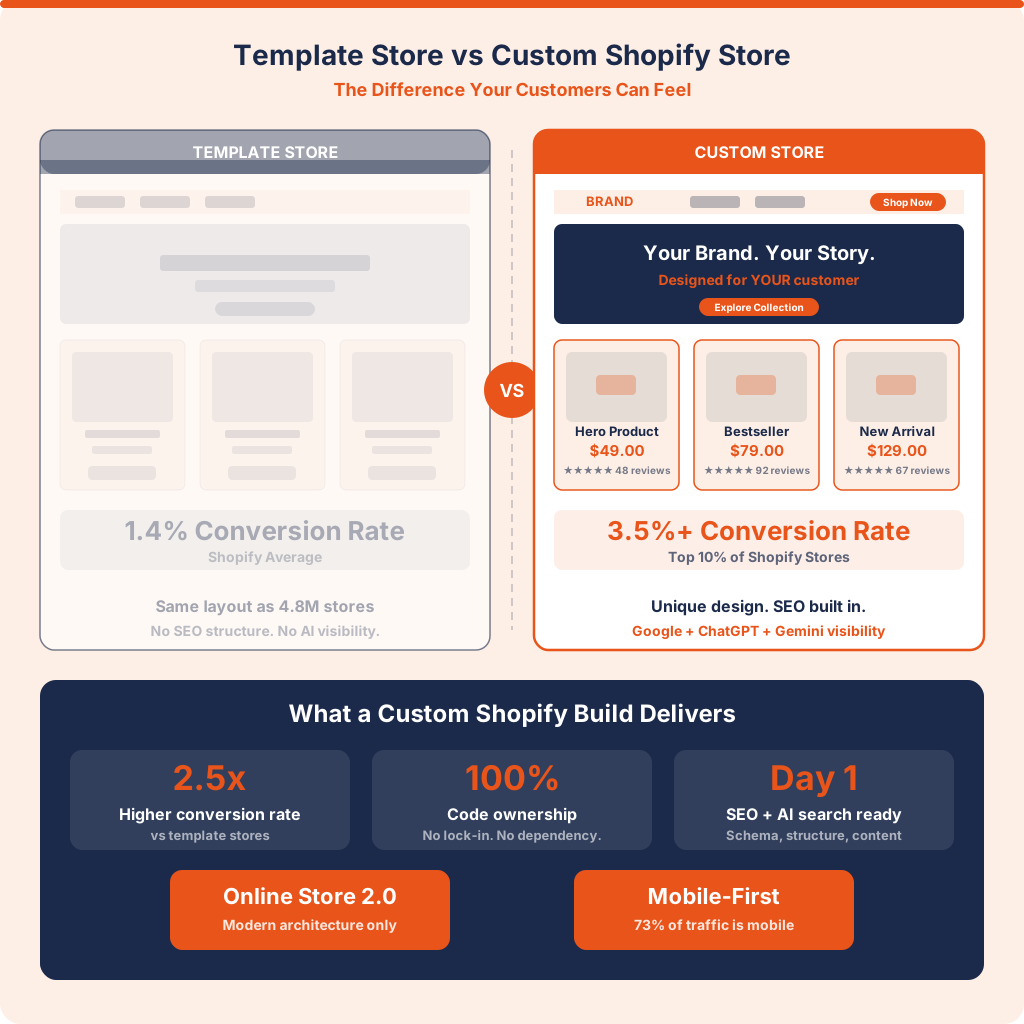
Truth: You can. And for a brand-new store testing product-market fit, that’s often the right call. But once you’re past the validation stage and spending money on ads, a store that converts at 1.4% (Shopify’s average) instead of 3.5%+ is costing you real money on every click. Professional Shopify web design pays for itself through higher conversion rates and lower customer acquisition costs.
Myth 3: "All Shopify stores look the same."
Truth: All template-based Shopify stores look the same. A custom-built Shopify theme using Liquid and Online Store 2.0 architecture can look and function like anything you need. The “Shopify look” is a template problem, not a platform limitation. Custom development removes that ceiling entirely.
Myth 5: "Redesigning my Shopify store will kill my traffic."
Truth: Only if the agency doing it doesn’t understand SEO. A properly executed Shopify redesign includes 301 redirect mapping, canonical tag preservation, URL structure audits, and post-launch indexation monitoring. We’ve handled dozens of website redesigns without a single ranking drop. The risk isn’t in redesigning. It’s in hiring someone who treats SEO as an afterthought.
What Our Clients Say About Working With Us
These are from real clients who trusted us with their web presence. Every testimonial includes their name, business, and the service they received.



FAQs About Shopify Website Design Services
Got questions before you commit? Here are the ones we hear most often from store owners considering a custom Shopify build.
Custom Shopify design ranges from $5,000 for a lean, focused store to $50,000+ for enterprise builds with custom checkout extensions and multi-currency storefronts. Most of our projects fall between $8,000 and $25,000. Price depends on product count, design complexity, custom functionality, and whether you're migrating from another platform.
A standard custom Shopify store takes 6-10 weeks from kickoff to launch. Larger projects with complex integrations, B2B channels, or extensive product catalogs can run 12-16 weeks. We set timelines during the strategy call based on your specific scope.
If you're validating a product idea, a free theme works fine. Once you're spending on ads or need conversion rates above Shopify's 1.4% average, professional design starts paying for itself. The gap between a template store and a custom-built one shows up in revenue, not just aesthetics.
Every store we build includes product schema markup, optimized URL structures, meta tag templates, collection page hierarchy, image optimization, and content structures designed for both Google and AI search visibility. SEO isn't an add-on. It's built into the development process.
Yes. About half of our Shopify projects are redesigns of existing stores. We audit your current store's performance, identify conversion and SEO issues, then rebuild with a custom theme while preserving your existing rankings through proper redirect mapping.
Standard Shopify handles most ecommerce needs. Shopify Plus adds custom checkout extensions, B2B wholesale channels, advanced automation through Shopify Flow, lower transaction fees at volume, and the ability to run multiple storefronts. Plus makes sense once you're processing $500K+ annually or need features the standard plans don't offer.
We handle full platform migrations including product data transfer, customer account migration, order history preservation, 301 redirect mapping, and SEO audit to ensure zero ranking loss. The migration timeline depends on your catalog size and integration complexity.
For dedicated ecommerce, Shopify is more reliable and lower-maintenance. You don't manage hosting, security patches, or plugin conflicts. For content-heavy businesses with a commerce component, WordPress with WooCommerce offers more flexibility. We build on both and recommend based on your actual business model.
structure product pages with answer-first content blocks, implement product and FAQ schema markup, and build content that AI engines can extract and cite. This involves entity optimization, structured data beyond what most Shopify agencies implement, and content patterns tested against actual AI prompts.
Three factors: speed (under 3-second load times), trust (visible reviews, clear return policies, professional photography), and friction removal (simplified navigation, easy checkout, mobile-optimized product pages). We address all three during the design and build process.
Shopify Plus supports B2B and DTC on the same storefront with separate wholesale channels, tiered pricing, custom catalogs, and net-terms payment options. For stores not yet on Plus, apps like Wholesale Club can bridge the gap with fewer native features.
We design every Shopify store for both human conversion and AI search discoverability. Most agencies build stores that look good but are invisible to ChatGPT, Gemini, and Google AI Overviews. We also pair store design with ongoing ecommerce SEO and link building so your organic traffic compounds after launch, not just your ad spend.
Stop Paying for Every Click. Build a Shopify Store That Ranks
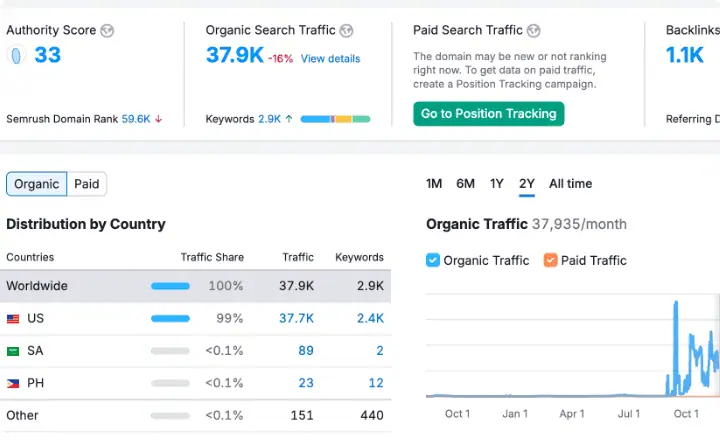
We’ve built ecommerce stores that generated 37.9K monthly organic visits, ranked for 2,900+ keywords, and turned organic traffic into revenue without a single ad dollar. Your Shopify store should be a revenue asset, not just a cost center. Let’s build it right.