Skip to content
Case study

ToolsPivot

ToolsPivot

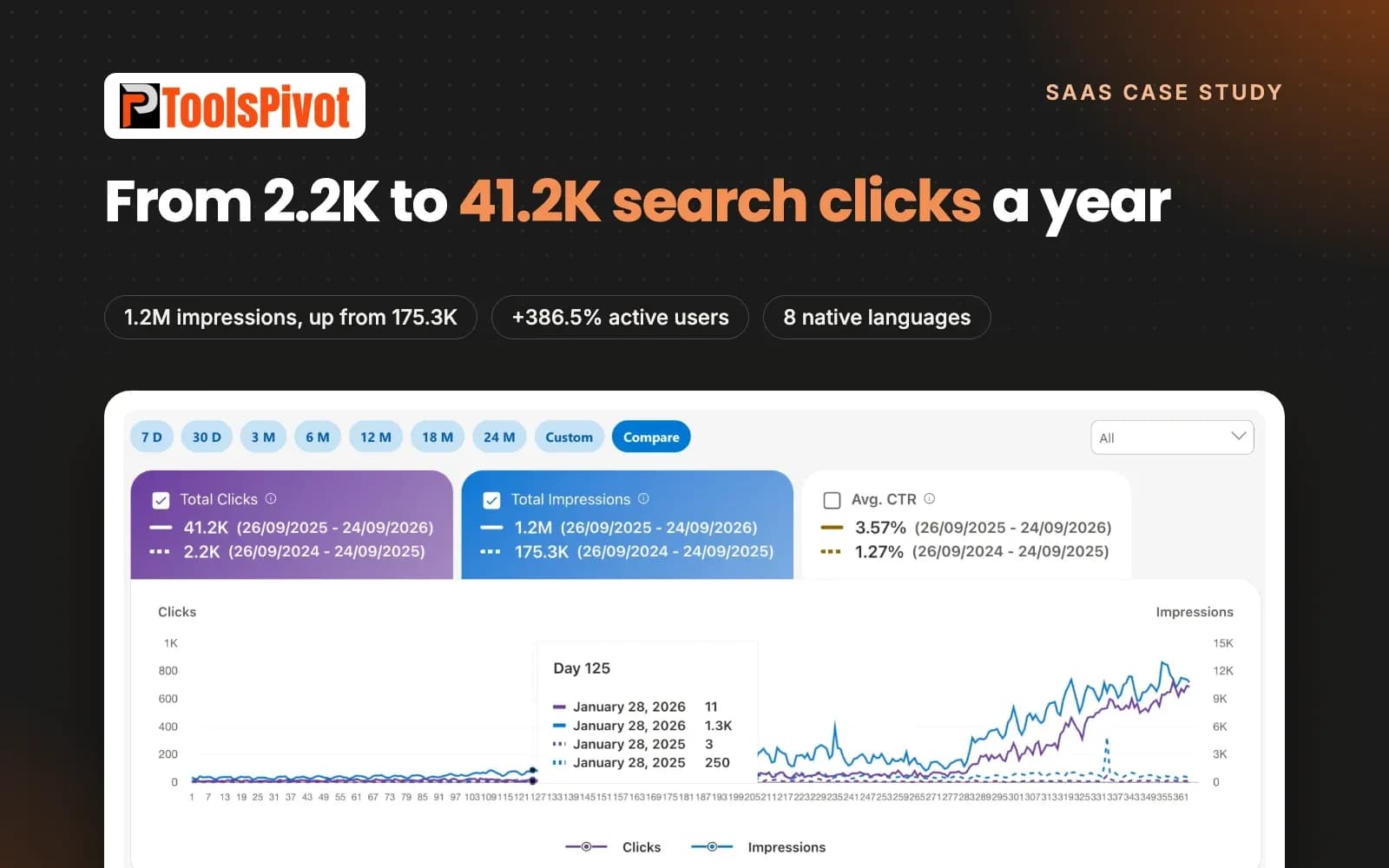
A free SEO and webmaster tools platform went from 2.2K search clicks a year to 41.2K, with impressions up from 175.3K to 1.2M and active users up 386.5%, after we rebuilt its tools, rewrote the content around them in eight natively written languages, added schema and internal links, and fixed a long list of technical errors.

Search clicks, year on year
+1,773%
Active users, year on year
+386.5%
ToolsPivot case study: search clicks up from 2.2K to 41.2K in a year, impressions up from 175.3K to 1.2M and active users up 386.5%

Industry

SaaS

Services

Web development, content strategy, localisation, technical SEO

Languages

Eight, each written natively

Website

toolspivot.com

Where it started

ToolsPivot is a hub of more than 170 free tools for SEO, content, web development and everyday work: keyword research, backlink and domain checkers, AI meta tag generators, grammar and plagiarism checkers, converters and calculators. Free SEO tools are one of the most crowded categories in search, where long-established brands take most of the clicks and every tool has dozens of near-identical rivals.

The site was not built to compete there. Its pages read like generic blog posts rather than pages about the tools, nothing linked one tool to the next, search engines were given no structured data to say what each page was, and a long list of technical errors held the rest back. Search sent it at most 10 clicks a day, and 2,200 in the whole year to September 2025.


Before and after

Before

  • 2.2K search clicks and 175.3K impressions in the year to September 2025
  • At most 10 search clicks a day, at a 1.27% click-through rate
  • Generic, blog-style content that was not about the tools
  • No internal links between tools
  • No schema markup
  • Many technical errors
  • Tools that did the same as everyone else’s, each built at a different time

After

  • 41.2K search clicks and 1.2M impressions in the year to September 2026
  • Around 700 search clicks a day by mid-September, at a 3.57% click-through rate for the year
  • 52K active users in a year, up 386.5%
  • Content written for each tool, in eight languages, each written natively
  • 45 tools rebuilt from scratch, and new tools for new searches such as AI SEO and GEO
  • Structured data, a public changelog and a version number on every tool
  • Tools linked to the related tools people need next
  • DocPivot, a new sub-brand for PDF and image tools, launched in August 2026

The results

Four reports from three different tools, each showing the same thing from a different side: search, the site’s own analytics and Google Analytics. First the whole year against the year before, then the last three months, then the people behind the numbers.

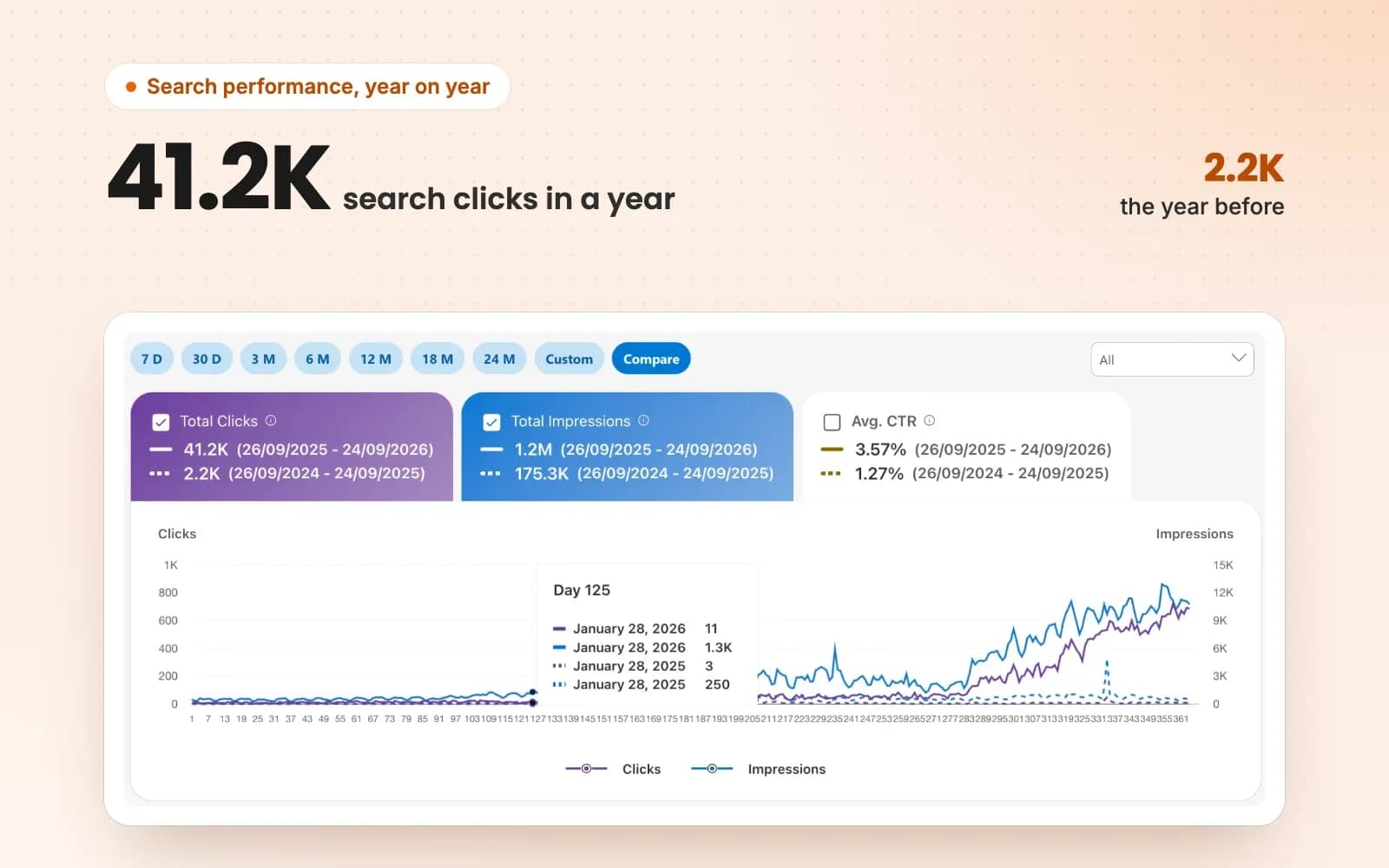
ToolsPivot search performance year on year: 41.2K clicks against 2.2K, 1.2M impressions against 175.3K, and a 3.57% click-through rate against 1.27%
Search, year on year

A year of search growth, side by side

The twelve months to September 2026 against the twelve months before, from the same search report. The dotted line is the year before, flat along the bottom. The solid line is this year, lifting through the spring and climbing steeply from the summer as the rebuilt tools, content and languages took hold.

  • Search clicks

    41.2K, up from 2.2K the year before: nearly nineteen times as many.

  • Impressions

    1.2M, up from 175.3K: close to seven times as often in search results.

  • Click-through rate

    3.57%, up from 1.27%: more of the people who see a result now choose it.

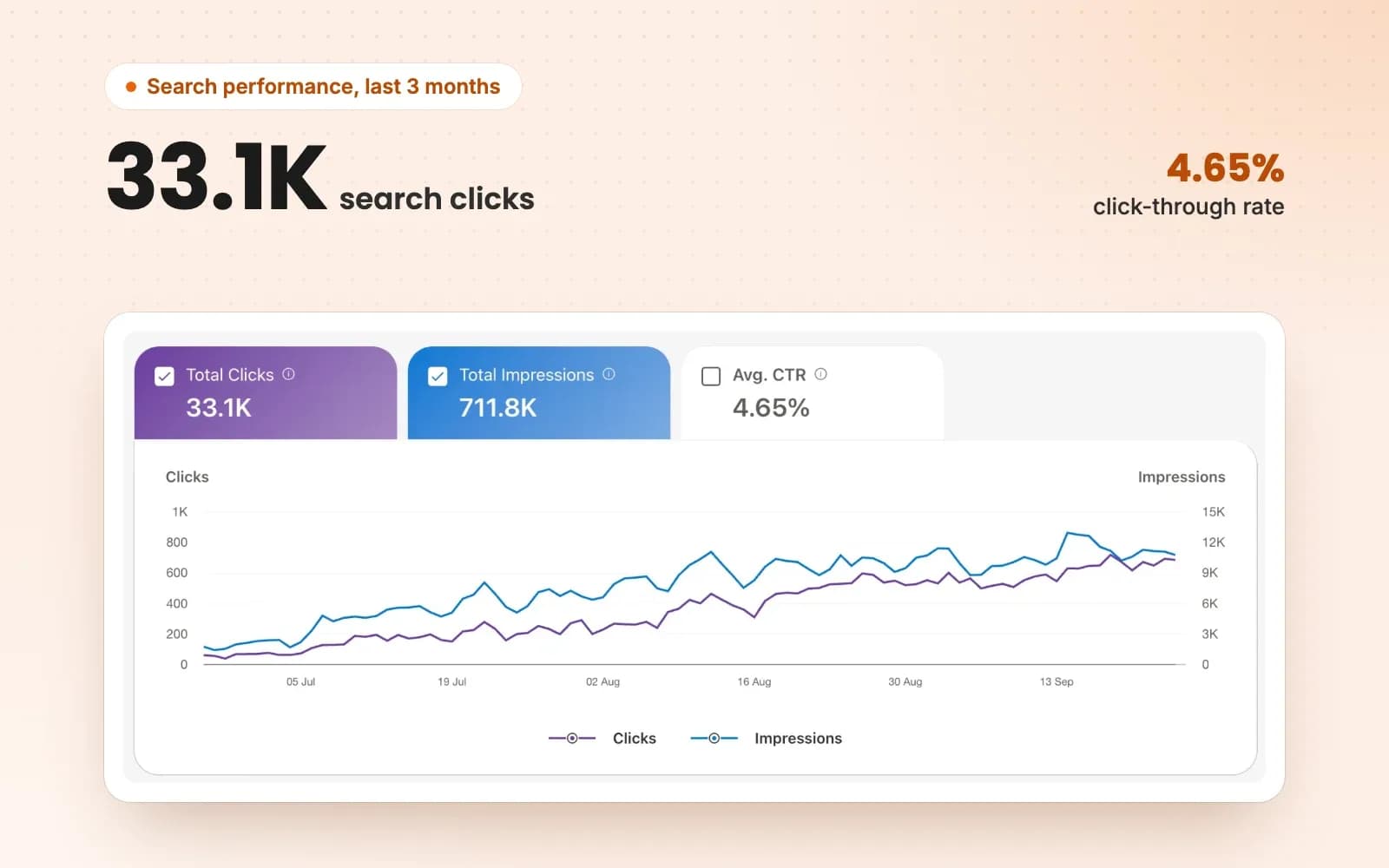
ToolsPivot search performance over three months: 33.1K clicks, 711.8K impressions and a 4.65% click-through rate, with daily clicks rising steadily
Search, last three months

Clicks that kept climbing week after week

Over the last three months the clicks line rises steadily, from around 60 a day in early July to around 700 by mid-September, and impressions rise with it. There is no single spike: that shape comes from pages and structure improving together, not from one lucky ranking.

  • Search clicks

    33.1K from Google search in three months.

  • Impressions

    711.8K times a ToolsPivot page appeared in results.

  • Click-through rate

    4.65% of the people who saw a result chose it.

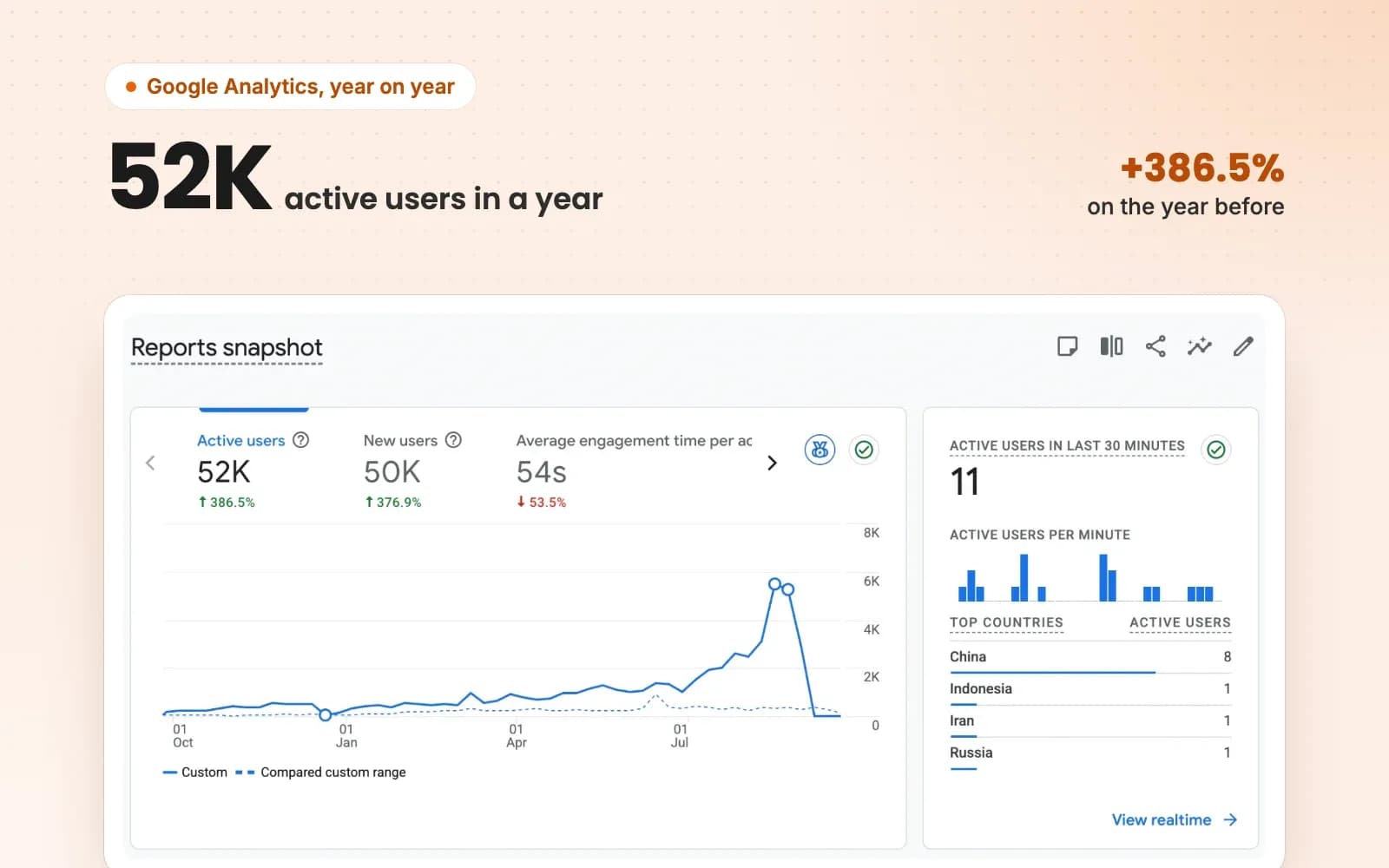
Google Analytics for ToolsPivot year on year: 52K active users, up 386.5%, and 50K new users, up 376.9%
Google Analytics, year on year

Users grew with search

Google Analytics tells the same story from the site’s side: over the year, far more people used ToolsPivot than the year before, and almost all of them were new to it.

  • Active users

    52K, up 386.5% on the year before.

  • New users

    50K, up 376.9%: people finding the site for the first time.

  • Growth from search

    The curve follows the search chart, rising with it from the summer.

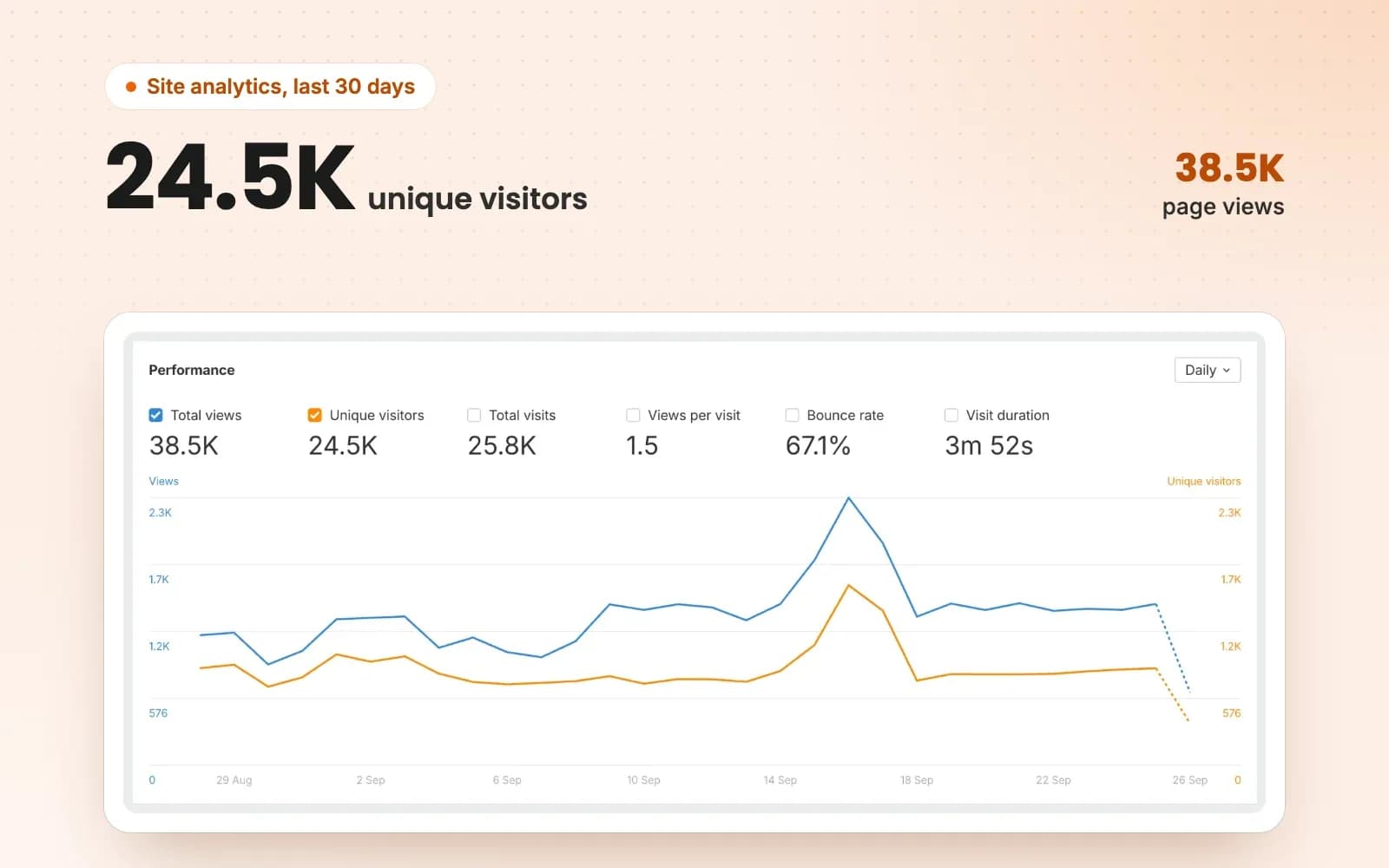
ToolsPivot site analytics, last 30 days: 24.5K unique visitors, 38.5K page views and an average visit of 3 minutes 52 seconds
Site analytics, last 30 days

Real people using the tools

The site’s own analytics show where the search traffic goes: visitors who arrive, use a tool and stay long enough to get their result.

  • Page views

    38.5K in the last 30 days.

  • Visits

    25.8K, from 24.5K unique visitors.

  • Time on site

    3m 52s on average: long enough to use a tool and get the result.

Is search ignoring your site?

We will audit it the way we audited ToolsPivot, and show you what is holding it back.

What we did, in seven parts

Growth like this does not come from one fix. It came from seven pieces of work done together over a year: the tools, the content, the languages, the technical errors, the signals that show the tools are maintained, the links between them, and finally a new sub-brand. Each part below sets out the problem we found and what we did about it.

Part 1 of 7

Tools rebuilt to beat the alternatives

Before rebuilding a tool, we used the leading alternatives, measured what they could and could not do, and collected what users complain about. Tools were taken in order of search demand, the most searched first.

The problem

  • Tools that did the same as everyone else’s, so there was no reason to pick them
  • Each tool built at a different time, with its own layout and its own quirks
  • New kinds of search, such as AI search, with no tools to answer them

The solution

  • 45 tools rebuilt from scratch, including the Keywords Research Tool, Broken Link Checker, Link Analyzer, DNS Lookup and WHOIS Lookup
  • Every rebuilt tool on one shared design, so a visitor who knows one knows them all
  • New tools for new searches: an AI SEO suite, AI Humanizer, GEO Audit and an llms.txt Generator
  • Faults found and fixed in the open, like a Plagiarism Checker fault that could show another sentence’s sources
Part 2 of 7

Pages about the tool, not blog posts beside it

The pages were written for a blog, not for the tools on them.

The problem

  • Generic, blog-style content that was not about the tool on the page
  • Pages that did not answer the search that brought people to them
  • Filler written to reach a word count rather than to help

The solution

  • Every page rewritten around the one job its tool does
  • Plain explanations of how the tool works, what each setting changes and what to expect
  • Short, specific help next to the controls, where people need it
Part 3 of 7

Eight languages, written natively rather than translated

Most tools sites localise by machine-translating the English. Readers notice, and so do search engines.

The problem

  • Translated copy reads as translated, and struggles to rank in its own market
  • A translated page with an English interface still feels foreign
  • Without language tags, search engines guess which version to show

The solution

  • Indonesian, Arabic, Portuguese, French and Russian added between February and March 2026, joining English, Spanish and Chinese
  • Content in each language written natively, and the whole interface translated, with a full right-to-left layout for Arabic
  • Language tags on every page, so Google shows each reader their own version
Part 4 of 7

The technical errors holding good pages back

A long list of technical problems was undoing the work on the pages. These are four of them.

The problem

  • Old tools left live beside the newer tools that replaced them, splitting their rankings
  • Error pages stored and served as if they were real pages
  • A site search that only found a tool by its exact name
  • Audit errors across the site, from the tracking tag to missing image alt text

The solution

  • Replaced tools merged into their successors, with permanent redirects so no ranking or link was lost
  • Only real pages cached, so error pages can no longer pile up and be served
  • Search that finds tools by what they do, in every language
  • Every audit error fixed at its source, not page by page
Part 5 of 7

Proof the tools are maintained: schema, changelog and versions

Nothing told search engines what the pages were, or told people the tools were looked after.

The problem

  • No schema markup, so search engines had to guess each page was a tool
  • No record of what had changed, or when
  • No sign that a tool was still maintained

The solution

  • Structured data on every tool page describing it as a software application, with its version
  • A public changelog with more than 60 releases, each saying what was added, improved or fixed, and when
  • A version number on every tool that moves when the tool changes
Part 6 of 7

Every tool leads to the next one

Search engines and people both find pages by following links, and there were none to follow.

The problem

  • No internal links between tools
  • Every tool was a dead end once the job was done
  • Search engines had to discover each tool on its own

The solution

  • Each tool linked to the related tools people need next
  • Tools linked across categories and across languages
  • One click from one job to the next, and a clear path for search engines to every tool
Part 7 of 7

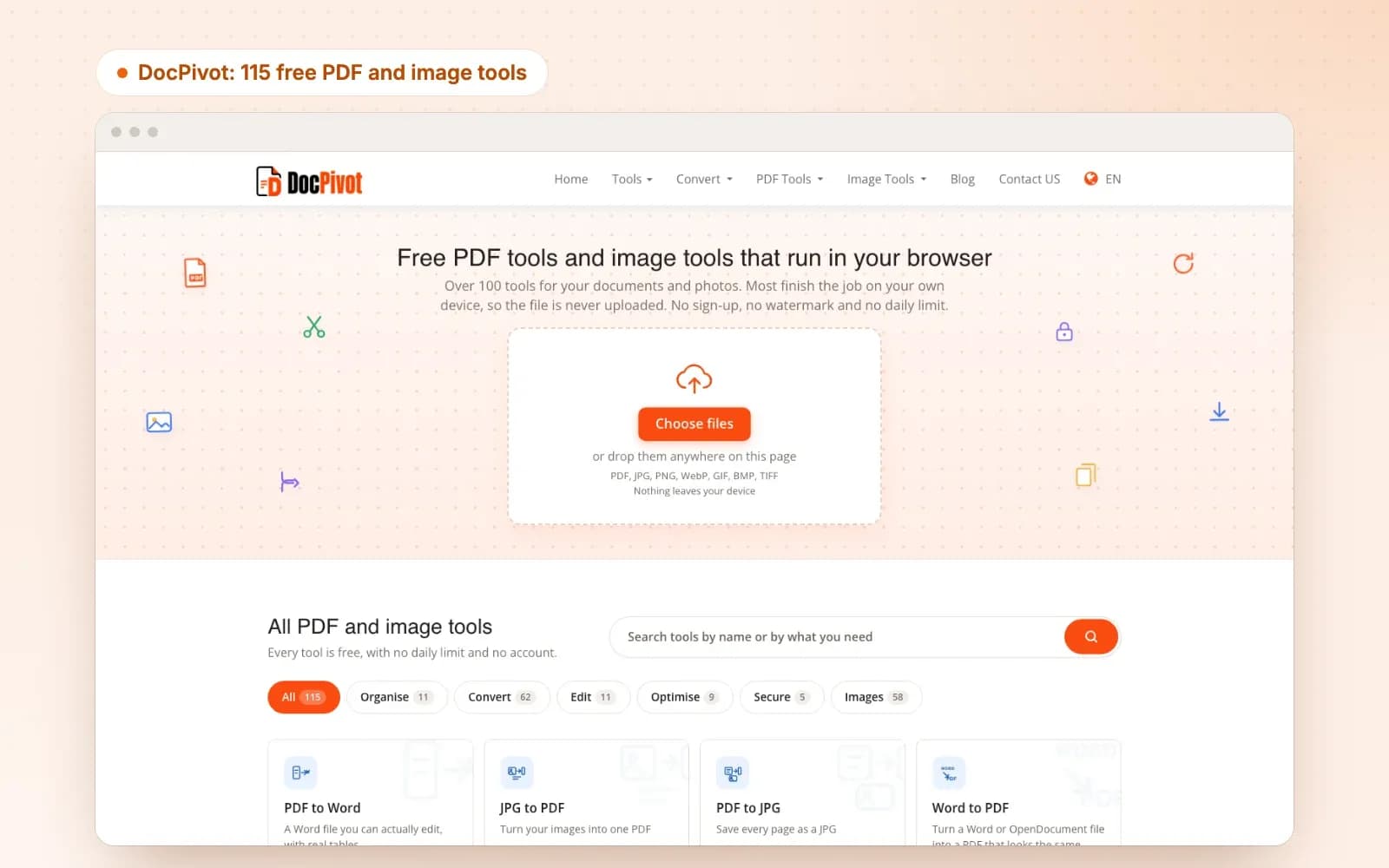
DocPivot: a sub-brand for PDFs and images

With the main site growing, the next gap was documents and images: jobs people search for every day, which deserved more than a handful of tools.

The problem

  • PDF and image jobs sent visitors to other sites
  • Most rival tools upload the file, which puts off anyone holding a contract, a payslip or an ID scan
  • Only a handful of older PDF and image tools, built before the new standard

The solution

  • DocPivot, launched on 23 August 2026 under ToolsPivot with 109 tools for PDFs, images and conversions
  • Most of its tools work inside the browser, so the file never leaves the visitor’s machine
  • One workspace for every tool, under its own name within ToolsPivot, with the older tools merged into it
Search clicks in a year, up from 2.2K
41.2K
Search impressions, up from 175.3K
1.2M
Click-through rate, up from 1.27%
3.57%
Active users in a year, up 386.5%
52K

What changed for the business

Search went from 2,200 clicks a year to 41,200, and from at most 10 a day to around 700. The climb began well before DocPivot launched in late August, so it belongs to the main site: its rebuilt tools, its content and its languages. The line is still climbing steadily rather than spiking, which is what content, structure and better tools produce and a single link or trend does not. Every new language and every improved tool now adds to a site that search engines already understand and trust, so each piece of work builds on the last.

More case studies

The Career Lume homepage: "Find the right college. Honestly." with a search box and 44,800+ colleges, 200+ courses and 30 streams, all verified

Career Lume

TheRankHQ designed and built Career Lume from scratch: a college discovery platform for Indian students with more than 44,800 verified college profiles, five free college predictors and a career assessment, built to be honest where college portals usually are not.

College profiles published
44,800+
Careers scored on fit and reality
220+
View full Case Study
The DocPivot homepage: free PDF and image tools that run in your browser, with a drop zone for files and a grid of all 115 tools

DocPivot

TheRankHQ designed and built DocPivot from scratch: 115 free PDF and image tools in one workspace, 82 of which never upload the file. It was planned around what established tools get wrong: daily limits, sign-ups, watermarks and re-uploading between every step.

Tools built from scratch
115
Tools that never upload a file
82
View full Case Study
Maby.us

Maby.us

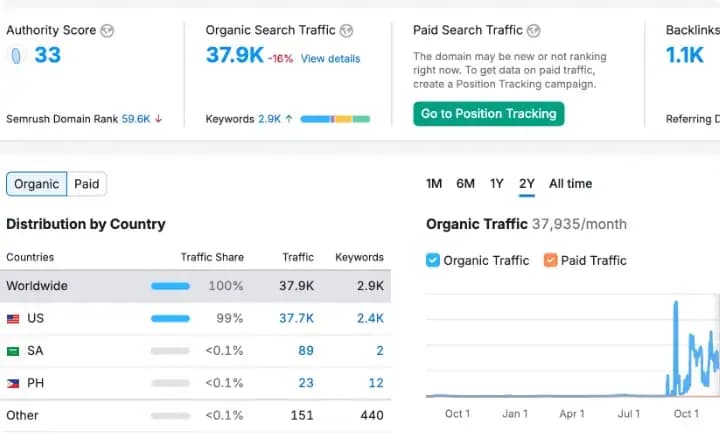
A nail salon booking platform went from almost no search traffic to 37.9K organic visits a month, after a guest post and digital PR campaign placed it in Benzinga, Barchart and IPS News.

Keywords Ranked
2.9K
Traffic Generated
37.9K
View full Case Study

Want growth like this?

Tell us about your site, and we will tell you what is holding it back.