Custom Web Design for Minneapolis Businesses That Need to Compete
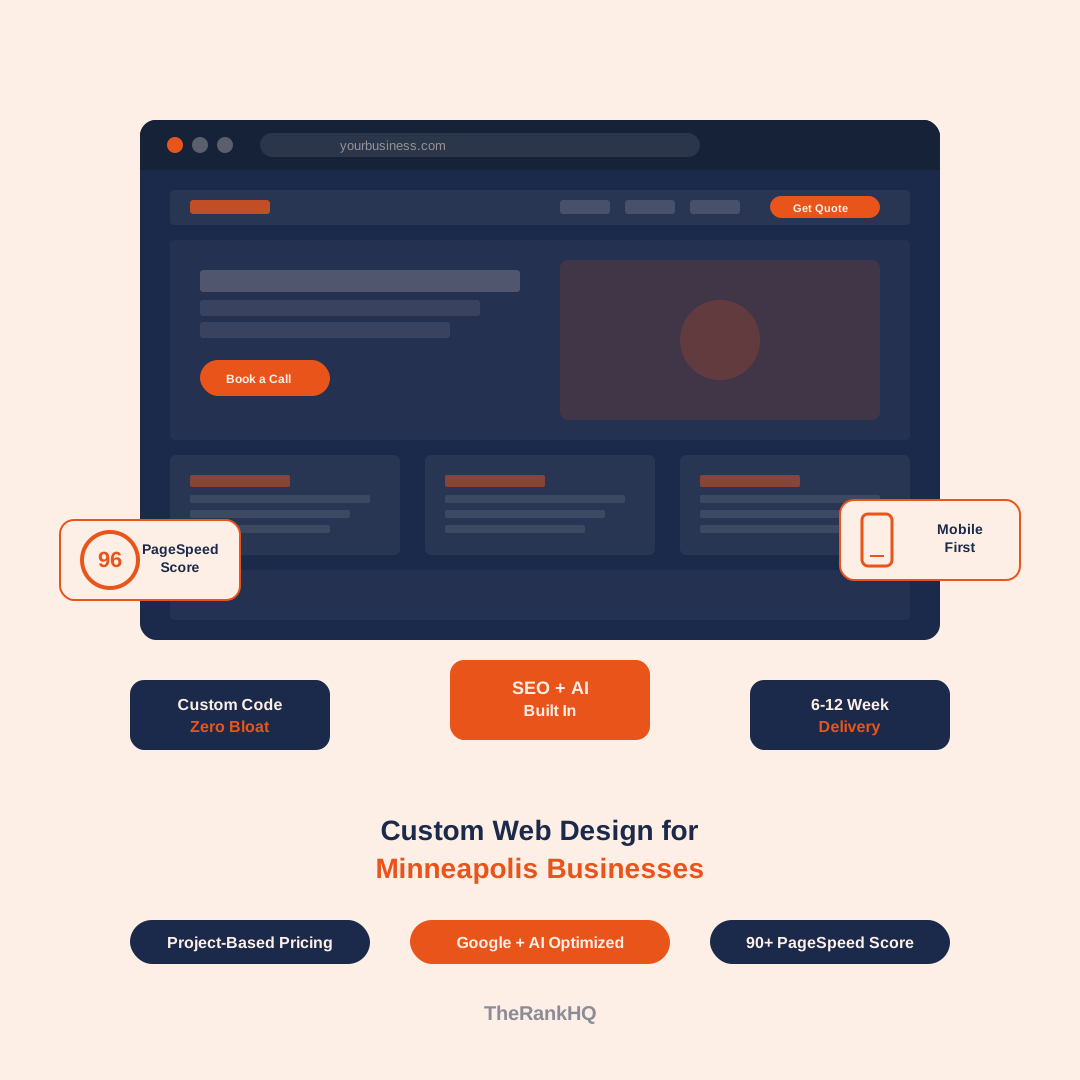
Your customers compare your site to Target, Best Buy, and UnitedHealth before they ever call you. We build custom-coded, mobile-first websites for Minneapolis businesses with SEO and AI search visibility baked into every page
Minneapolis Businesses Compete With Fortune 500 Sites on Half the
The Twin Cities metro has 17 Fortune 500 headquarters, more per capita than anywhere else in the world (Fortune, 2025). That shapes what your customers expect when they land on your website.
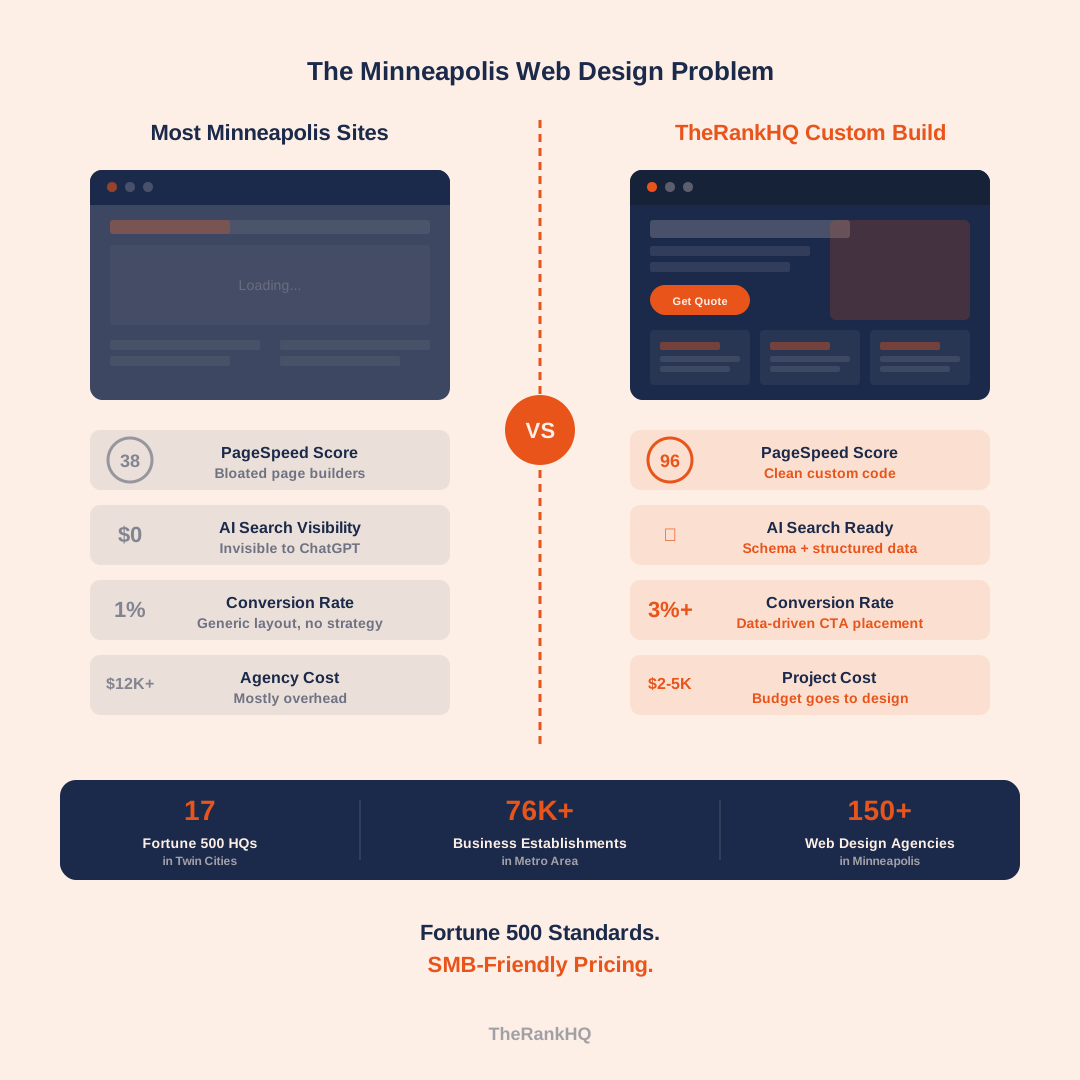
Here's the problem. Most small and mid-size Minneapolis businesses run $3,000 template sites while their prospects compare them to corporate-grade digital experiences daily. Over 76,000 business establishments operate in the metro (Minnesota DEED), and the majority of their websites score under 50 on PageSpeed because they're built on bloated page builders.
Healthcare has 10,000+ locations here. Manufacturing contributes 13% of state GDP (Source: Minnesota DEED, 2023). These aren't industries where a generic five-page template earns credibility. They need structured capability pages, patient acquisition funnels, and product catalogs that hold up against the big players.
A web design company that understands this market builds on clean custom code that loads fast, ranks on Google, shows up on ChatGPT and Perplexity, and converts the visitors your competitors keep losing.
Years of experience
8+
Satisfied clients
100+
Countries served
7+
Revenue generated
$10M+
Minneapolis Web Design Services
Web Design and Development Services for Minneapolis Companies
Every Minneapolis business has different requirements depending on its industry, audience, and growth goals. Here's what we build. Learn more about our web design company.
Custom Website Design
We design every page from scratch around your business goals, your Minneapolis audience, and the search behavior that drives your industry. No templates. No recycled layouts. Clean, modern design that reflects the credibility your market demands.
WordPress Development
About 40% of the web runs on WordPress for a reason (Source: W3Techs, 2026). We build custom WordPress websites with lightweight themes, zero page-builder bloat, and admin panels your team can actually manage without calling a developer every week.
Ecommerce & Online Stores
If your Minneapolis retail or consumer brand sells products online, your store needs more than a Shopify template. We build ecommerce sites with custom product pages, fast checkout flows, and inventory sync that works with your existing systems.
Website Redesign
A website redesign preserves your existing SEO equity while rebuilding the design, code, and architecture from the ground up. We handle 301 redirects, content migration, and performance optimization so nothing breaks during the transition.
Landing Pages Design
Ad spend gets wasted when traffic lands on a generic homepage. We design dedicated landing pages with single-purpose conversion architecture, A/B test-ready layouts, and messaging that matches the intent behind every click.
AI Search-Ready Architecture
Your Minneapolis competitors' websites weren't built for ChatGPT, Perplexity, or Google AI Overviews. Ours are. We structure every site with schema markup, answer-first content blocks, and AI-optimized architecture so search engines can find, understand, and cite your content.
Industries We Serve
What Minneapolis's Biggest Industries Actually Need From Their Websites
Minneapolis isn't a one-industry town. The metro's economy runs on healthcare, finance, manufacturing, retail, and professional services. Each one needs a different kind of website, not a template with the logo swapped out.
Custom, Template or DIY: Choosing a Build for Your Minneapolis Site
Minneapolis business owners hear "just use Squarespace" or "grab a template" all the time. Sometimes that's fine. Sometimes it costs you more than the money you saved. Here's an honest breakdown.
Feature
Custom Web Design
Premium Template
DIY Builder (Wix/Squarespace)
Design uniqueness
100% original, built around your brand
Shared with thousands of other sites
Limited to builder's layout options
Conversion optimization
CTA placement, form flows, and layout based on user behavior data
Add pages, features, and integrations without limits
Limited by theme structure
Limited by platform capabilities
Typical cost
$2,499-$8,999 (TheRankHQ)
$500-$2,000 + theme cost
$16-$46/month + apps
Time to launch
2-6 weeks
2-4 weeks
1-2 weeks
Ongoing flexibility
Full code access, any developer can modify
Locked to theme updates
Locked to platform
Best for
Businesses that need to compete and convert
Solo consultants with simple needs
Personal projects, hobby sites
Web Design Across Minneapolis, Neighborhood by Neighborhood
Minneapolis isn't one market. A downtown financial firm, a North Loop design studio and a Northeast brewery sell to different people, so their websites shouldn't look or work the same. We design for all of them.
Downtown & Nicollet Mall
Target and U.S. Bancorp both run their headquarters here, surrounded by law firms, banks, and corporate offices. Businesses downtown need polished sites with clear service pages, advisor and attorney profiles, and secure intake forms.
North Loop
Old warehouses turned into offices, agencies, restaurants, and boutiques, a few blocks from Target Field. Creative firms and tech startups here want strong portfolios, fast product pages, and a brand that feels as sharp as the neighborhood.
Northeast Arts District
Artist studios, craft breweries, and makers fill the old industrial buildings across the river. These businesses need visual, story-driven sites with event calendars, online shops, and taproom hours people can find on their phones.
Uptown & Lyn-Lake
Independent retail, restaurants, fitness studios, and salons near the Chain of Lakes. Most visits happen on a phone, so these sites need online booking, ordering, and local SEO that shows up when someone searches nearby.
University & Stadium Village
The University of Minnesota brings research labs, health clinics, and student-focused businesses. They need accessible, content-rich sites that explain complex services in plain language and work well for a young, mobile audience.
Bloomington & I-494
Mall of America, airport hotels, and corporate campuses line this stretch just south of the city. Hospitality and B2B companies here need booking-driven sites, multi-location pages, and lead forms that turn visits into sales calls.
Minneapolis Website Design Strategy
How a Minneapolis Web Design Project Works From Call to Launch
Minneapolis has over 150 web design agencies (Clutch, 2026). Most of them won't tell you what actually happens between signing the contract and getting your site. We will. This process has been tested across 100+ client projects, and most go live in 2 to 6 weeks.
1Discovery
Discovery Against the Twin Cities Corporate Benchmark
Minneapolis buyers spend their days on Target, Best Buy and UnitedHealth properties, then open your site and judge it by the same yardstick. The discovery call covers how you earn revenue, who signs off on a purchase, and where the current site loses them. Next comes the data: your Google Analytics 4 and Search Console history, plus an audit of the competitors ranking in the metro, whether those are other North Loop firms or suppliers in Plymouth and Eden Prairie. Findings go into a written project brief.
Document revenue lines, decision makers, and the actions that count as leads
Pull baseline traffic and query data from GA4 and Search Console
Audit ranking competitors across Minneapolis, St. Paul, and the suburbs
Note compliance needs such as HIPAA forms or contractor license display
Deliver a project brief you approve before the sitemap begins
2Architecture
Site Architecture for Twin Cities Catalogs and Clinics
Manufacturers in the northwest suburbs and clinic groups in Edina and Bloomington share one architecture problem: too much content for a five-page template. This phase produces a Figma sitemap that organizes product families, spec sheet libraries, service lines and location pages into a hierarchy a buyer can scan and a crawler can follow. A Minneapolis company with branches in Maple Grove and Woodbury gets a distinct URL for each branch, never one page listing addresses. URL slugs, breadcrumb trails and link paths are fixed at this stage.
Produce a clickable Figma sitemap covering every template and page
Group products, spec sheets, and service lines into scannable categories
Give each branch or clinic its own indexable location URL
Set URL naming, breadcrumb trails, and internal link paths
List the content, media, and schema each page will need
3Wireframes
Wireframes for Engineers, Patients, and Procurement Reviewers
Different Twin Cities visitors want different proof. An engineer sourcing a component wants a downloadable drawing in two clicks, a patient wants an appointment slot, and a procurement reviewer wants certifications and a capability statement. Wireframes assign each of those tasks a clear path before visual design starts, on a phone as well as a desktop. Responsive web design for Minneapolis also means planning for January: a homeowner with a dead furnace needs the phone number first, not a slideshow.
Wireframe the homepage, catalog, service, and location templates
Map the shortest path to quotes, downloads, and appointments
Place certifications, case evidence, and reviews beside decision points
Design mobile layouts first, then expand to tablet and desktop
Keep emergency contact actions visible for seasonal service businesses
4Design
Visual Design That Stands Beside Fortune 500 Neighbors
The Twin Cities metro has 17 Fortune 500 headquarters (Fortune, 2025), and their design departments have trained local customers to expect restraint, legibility and consistency. Mockups are drawn in Figma from a design system made for your brand: a type scale, a color palette with accessible contrast, and reusable components. Nothing comes from a purchased theme. You see the homepage and inner pages at desktop, tablet and phone sizes, comment directly on the file, and approve the direction before development begins.
Create a design system with type scale, palette, and components
Check color contrast against WCAG thresholds during design, not after
Mock up homepage and inner templates in Figma
Show every layout at desktop, tablet, and phone widths
Collect your comments in Figma and refine before sign-off
5Development
Custom Code for Minneapolis Sites Stuck on Page Builders
Slow page-builder themes are the usual reason a local site fails Core Web Vitals, so development starts from hand-written templates instead. WordPress is the common choice for a Minneapolis service firm or clinic that publishes often, Shopify fits retailers that need inventory and checkout, Webflow fits compact marketing sites, and a headless CMS fits manufacturers whose product data lives in another system. Forms, CRMs, scheduling tools and dealer locators are integrated on a staging server, where you can test them before the public can.
Hand-code templates on WordPress, Shopify, Webflow, or a headless CMS
Structure CMS fields for products, spec sheets, providers, and locations
Integrate CRM, scheduling, ecommerce, and locator tools on staging
Keep scripts light so pages pass Core Web Vitals on mobile
Give you a private staging link for review and testing
6SEO + AEO
On-Page SEO and Answer Engine Structure for Minnesota Searches
Ranking in this metro means being specific about place. A roofer in Northeast, a dentist in Uptown and a machine shop in Fridley compete in different map results, so each page states the service, the city and the proof in plain sentences that Google and AI assistants can lift. Title tags, headings, internal links and schema markup are written into the Minneapolis build during development. Structured data for services, the organization, FAQs and breadcrumbs helps ChatGPT, Perplexity and AI Overviews identify who you are and what you do.
Write title tags, meta descriptions, and headings for every page
Mark up services, locations, FAQs, and breadcrumbs with structured data
Phrase key answers so AI assistants can quote them without context
Convert images to WebP, compress them, and write alt text
Set up GA4, Search Console, and conversion tracking before launch
7Launch
Launch QA and Accessibility Checks for Minnesota Businesses
Pre-launch QA on a Minneapolis site covers three things. Accessibility comes first, since the Minnesota Human Rights Act has been applied to business websites: color contrast, keyboard access and screen reader labels are reviewed against WCAG 2.1. Performance follows, with Core Web Vitals measured on each template. Compatibility closes the list, across desktop browsers and both mobile platforms. Redesigns also receive a 301 redirect for every old URL. Launch ends with CMS training for your staff and the start of 30 days of post-launch support.
Cross-test on desktop browsers, iOS Safari, and Android Chrome
Audit Core Web Vitals on each template and resolve failures
Review contrast, focus order, form labels, and screen reader output
Redirect old URLs with 301s and verify them after go-live
Run CMS training and open the 30-day support window
What You Get
What's Included When You Hire Our Minneapolis Web Design Firm
When you're competing with Fortune 500 sites on a smaller budget, scope creep hurts. These six deliverables are fixed in every Minneapolis project.
Project Brief & Sitemap
A documented plan and sitemap, approved by you, before any design is produced.
Revenue model, audiences, and lead definitions
Figma sitemap with product and location hierarchy
URL, breadcrumb, and internal link rules
Wireframe Documents
Blueprints showing how engineers, patients, or homeowners reach the action that matters.
Wireframes for each core template
Quote, download, and scheduling paths marked
Phone-first layouts alongside desktop views
Visual Design Mockups
Figma mockups with the restraint and consistency Twin Cities customers see from big brands.
Brand design system and component library
Accessible color contrast checked in design
Desktop, tablet, and phone versions
Fully Built Website
A hand-coded, responsive site that loads quickly and is ready for search on day one.
No page builders or theme bloat
CMS fields shaped around your content
Structured data and on-page SEO in place
CMS Training Package
Practical training so marketing or office staff can publish without filing a ticket.
Editing pages, products, and staff profiles
Adding locations, posts, and spec sheets
Role-based logins for each editor
30-Day Support Period
A month of post-launch help covering bugs, tweaks, and early performance questions.
Fixes for anything that breaks
Minor copy and layout changes
Redirect and speed checks after go-live
Case studies
Websites We've Designed That Actually Drove Results
Custom design paired with SEO-first architecture. That's what separates a portfolio piece from a website that performs on search engines and in AI search. Here are three projects we built that way.
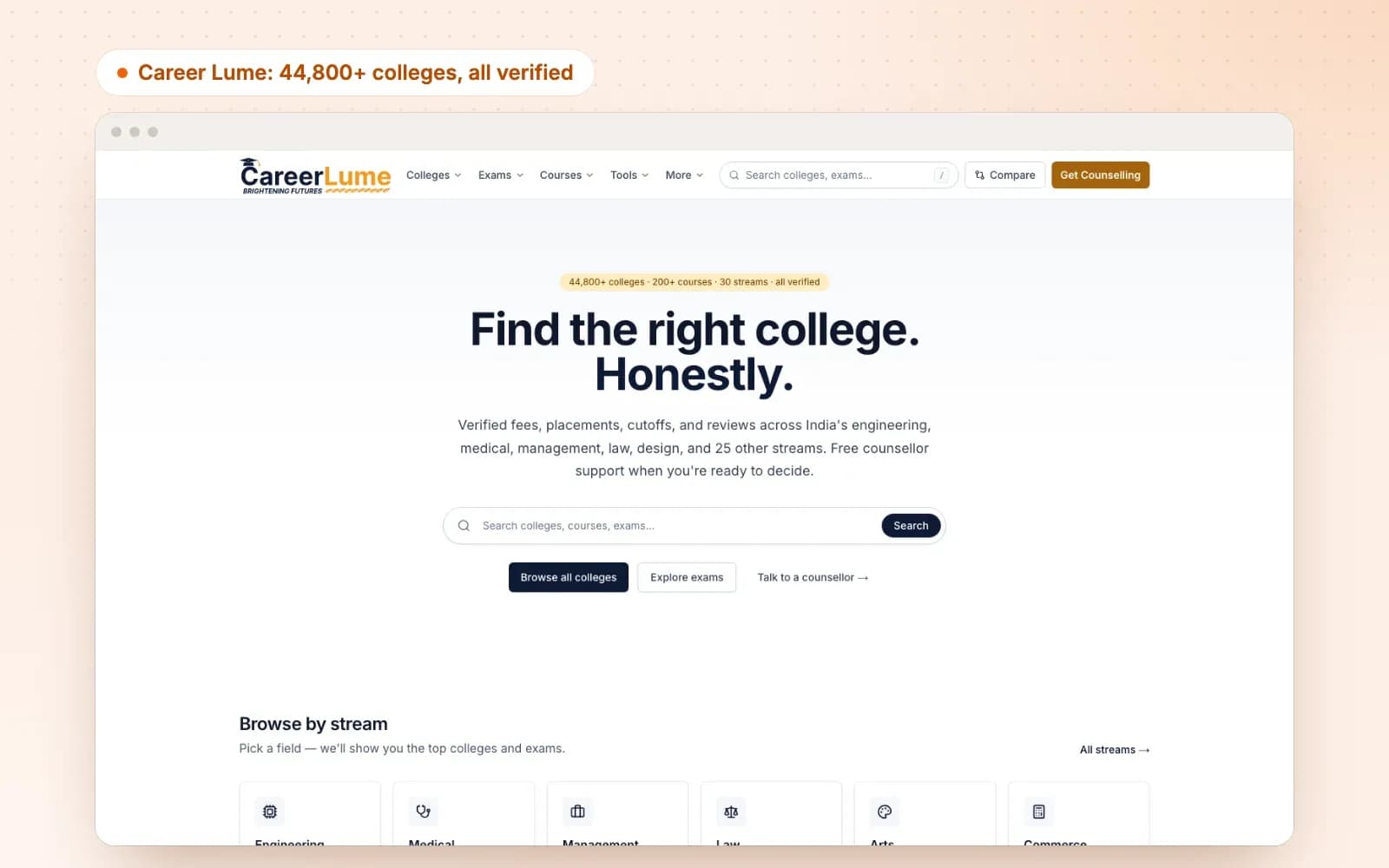
TheRankHQ designed and built Career Lume from scratch: a college discovery platform for Indian students with more than 44,800 verified college profiles, five free college predictors and a career assessment, built to be honest where college portals usually are not.
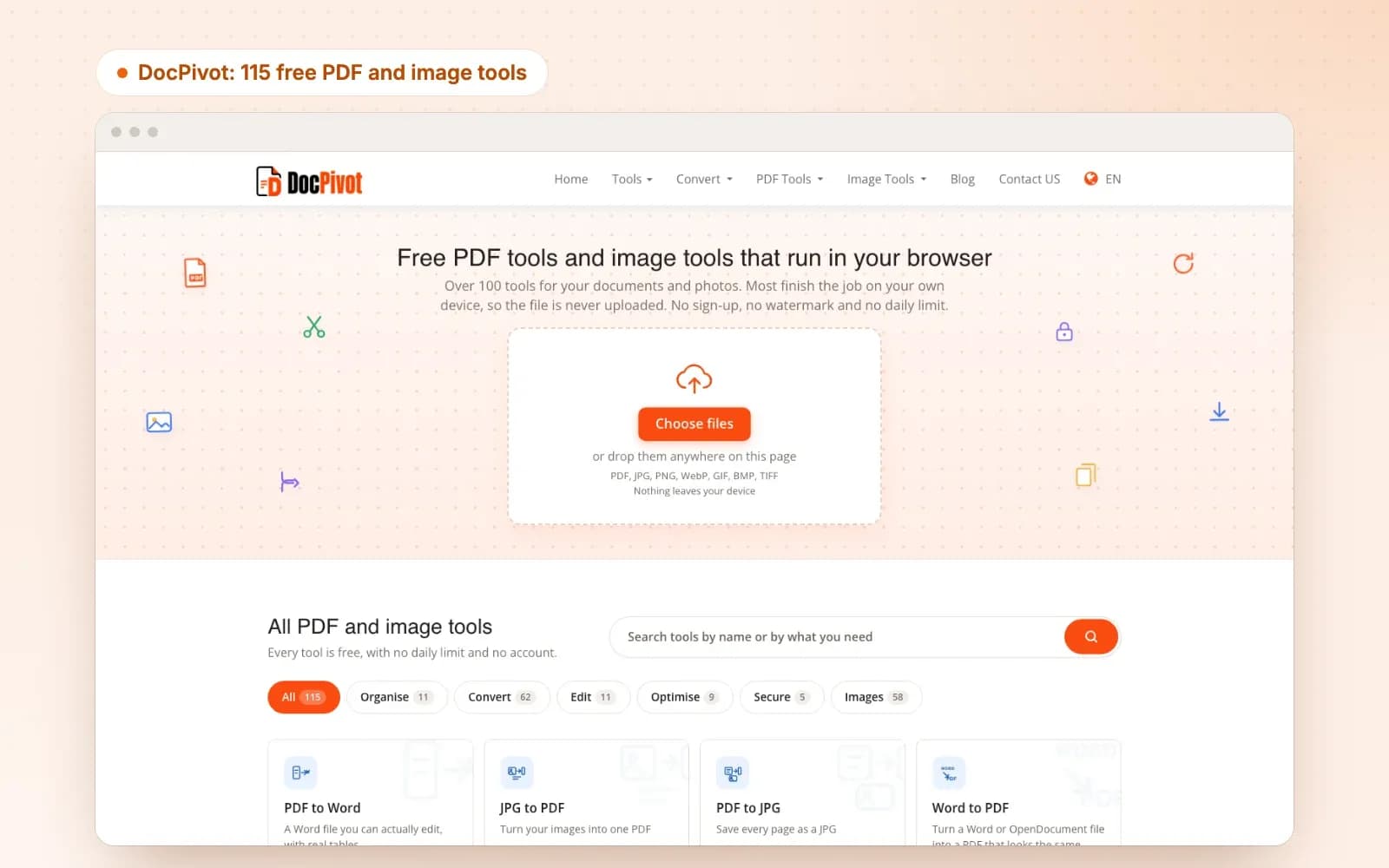
TheRankHQ designed and built DocPivot from scratch: 115 free PDF and image tools in one workspace, 82 of which never upload the file. It was planned around what established tools get wrong: daily limits, sign-ups, watermarks and re-uploading between every step.
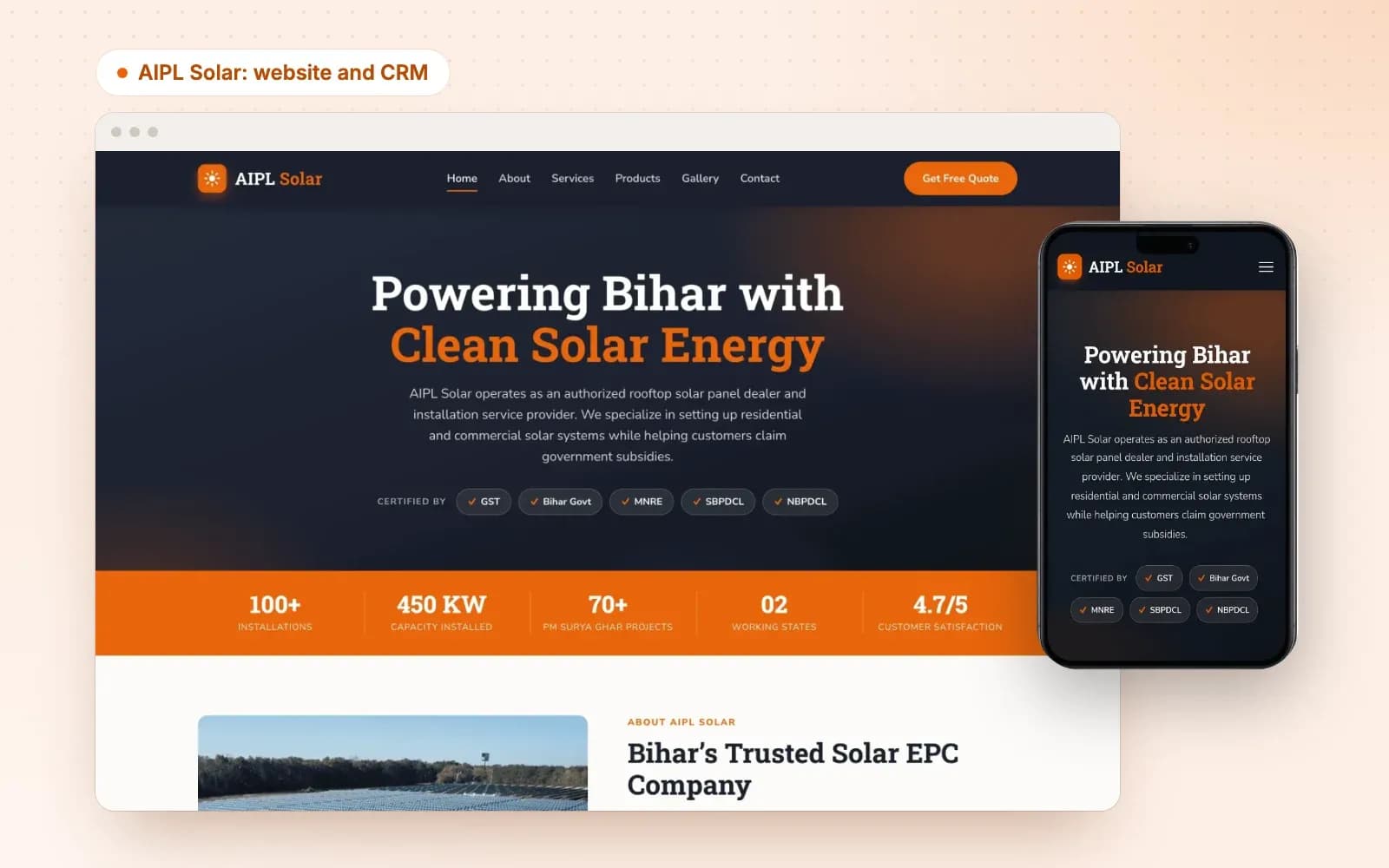
A growing solar installer in Bihar was running its business across government portals, billing software, sales apps, inventory tools and spreadsheets. We designed and built a custom website and a CRM dashboard that brings leads, projects, finances and the team into one place.
Past the Twin Cities: Where Else Our Web Design Company Builds
From med tech startups in the Twin Cities to financial firms on the East Coast and manufacturing companies across the Midwest, we build custom websites for businesses in the markets that matter most. Find your city below.
Service Areas
Minneapolis Web Design Pricing
What Custom Web Design Costs in the Minneapolis Market
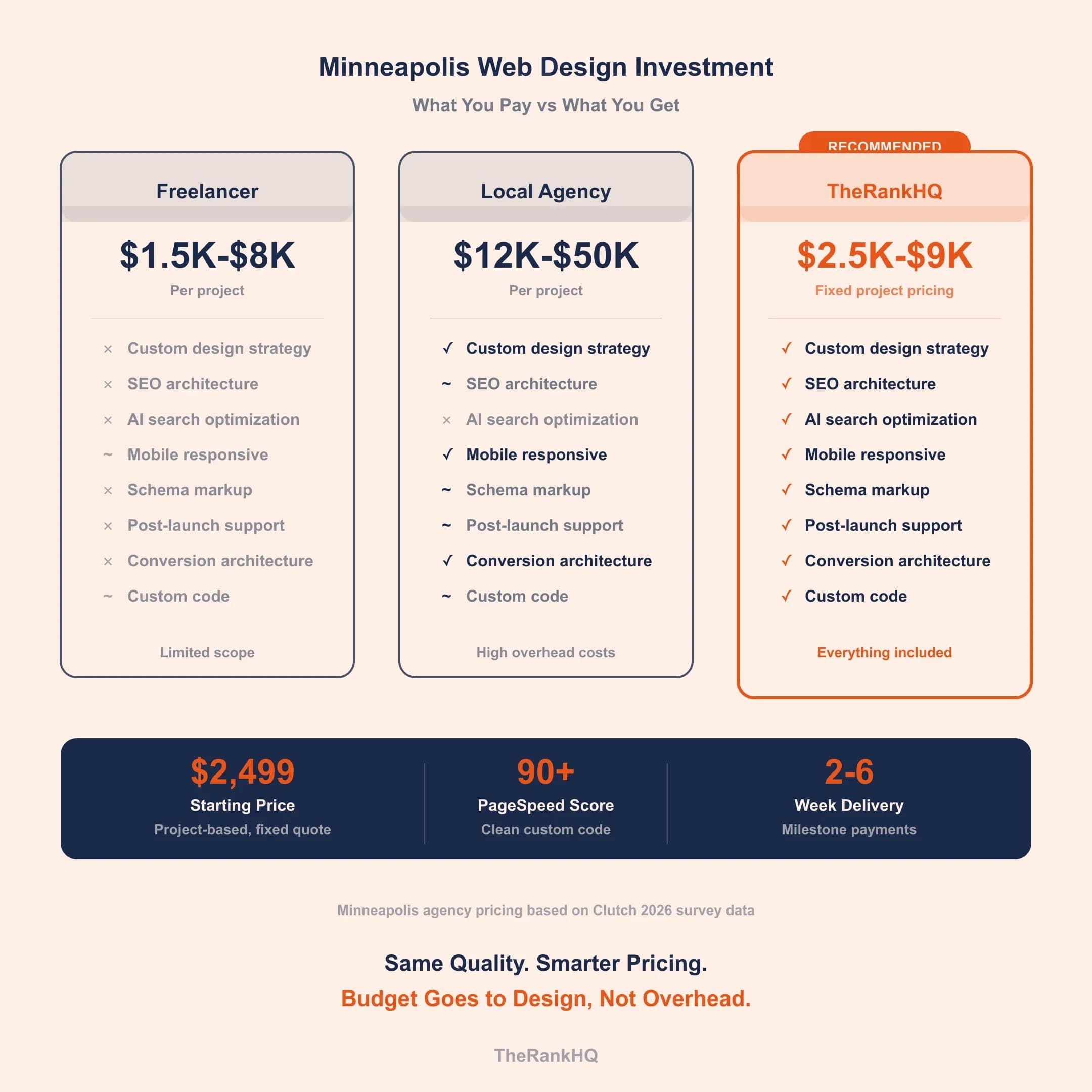
Minneapolis has over 150 web design agencies (Clutch, 2026). The average small business project through a local shop runs $12,000 to $15,000. Full-service agencies like Perrill start at $25,000 and go past $100,000. A lot of that covers North Loop office space, not design quality.
What drives cost? Page count, ecommerce integration, custom functionality, third-party connections, and content needs. A 5-page service site and a 30-page product catalog are completely different projects.
TheRankHQ uses project-based pricing with a fixed quote after the discovery call. No hourly billing, no retainer traps. Milestone payments tied to deliverables. Most Minneapolis projects fall between $2,499 and $8,999 for custom design and development that local agencies charge $12,000+ for.
Think about what a bad site costs you. If yours converts at 1% instead of 3% and you're spending $2,000/month on ads, that's $4,000/month in lost revenue. A custom build pays for itself in the first quarter.
Responsive Web Design on a Platform Your Minneapolis Team Can Run
We pick the CMS that fits your business, not the one that's easiest for us. Each platform has trade-offs. We'll tell you which ones matter for your Minneapolis project.
WordPress
Shopify
Magento
Drupal
Joomla
Squarespace
HubSpot
WordPress
Shopify
Magento
Drupal
Joomla
Squarespace
HubSpot
WordPress
Shopify
Magento
Drupal
Joomla
Squarespace
HubSpot
WordPress
Shopify
Magento
Drupal
Joomla
Squarespace
HubSpot
JavaScript
Python
Java
HTML5
CSS3
React
Vue.js
Angular
Node.js
JavaScript
Python
Java
HTML5
CSS3
React
Vue.js
Angular
Node.js
JavaScript
Python
Java
HTML5
CSS3
React
Vue.js
Angular
Node.js
JavaScript
Python
Java
HTML5
CSS3
React
Vue.js
Angular
Node.js
AI Search Platforms
Minneapolis Businesses Are Being Searched on AI. Your Site Should Be Ready
Your Minneapolis customers are already asking ChatGPT and Perplexity for recommendations in your industry. We build every site so AI search engines can find, understand, and cite your content before your competitors catch on
Why Choose Us
Why Minneapolis Companies Choose Our Web Design Company Over a Local Firm
Minneapolis has plenty of agencies. Here's why businesses that compare us to local shops keep choosing TheRankHQ.
Readable by Buyers and AI Assistants
Procurement reviewers skim, and so do language models. Pages are written with plain headings, direct answers and structured data, which lets a buyer in Bloomington and an assistant like ChatGPT or Perplexity find the same facts about your company quickly.
A Written Brief Comes First
Design does not start until a project brief records your revenue model, decision makers and metro competitors. That discipline suits a market where a medical device supplier and a Northeast taproom need nothing alike from a website.
Hand-Written Code, Fast Pages
Most metro business sites that score under 50 on PageSpeed are weighed down by page builders. Ours are coded by hand, mobile-first, with only the scripts a page needs, which keeps Core Web Vitals healthy and maintenance simple.
Fixed Quotes Below Local Agency Averages
The average small business project at a local shop runs $12,000 to $15,000, and a Minneapolis web design firm with North Loop rent has to charge for it. Our custom builds are quoted once, at $2,499 to $8,999, and never billed hourly.
Search Structure Is Part of the Build
On-page SEO, schema markup, internal linking and AI-search formatting ship with every site and are not sold separately. A company competing for searches in Edina or St. Louis Park launches with that groundwork in place, and broader campaigns can follow through our SEO services.
Yours to Run After Launch
CMS training puts your own staff in charge of updates, and a 30-day support period follows launch for fixes and small changes. Website, source code and domain name are yours, so you can use any standard host and hire any developer later.
Myth Buster
Don't Let These Web Design Myths Shape Your Minneapolis Site
We hear these from Minneapolis business owners almost weekly. Each one costs real money when acted on.
A $500 template site is good enough for my business.
Nearly half of consumers (46.1%) judge a website's credibility in part by its design (Source: Stanford Persuasive Technology Lab, 2002). A template shared with thousands of other sites doesn't communicate credibility in a market where your customers compare you to Fortune 500 digital experiences daily. "Good enough" is costing you deals you never even know about.
I can just use a DIY builder and do it myself.
DIY builders work for personal projects and hobby sites. But they lock you into proprietary platforms, limit your SEO control, and cap your performance. When your Minneapolis business outgrows the builder, you'll rebuild from scratch anyway. That "savings" becomes double the cost.
Web design is just about making things look pretty
A beautiful site that doesn't convert is a wall decoration. Real web design includes conversion architecture, page speed optimization, mobile UX, and search visibility. The Minneapolis agencies charging $15,000 for a pretty mockup and no strategy are selling you half a service.
SEO can be added after the website launches.
Retrofitting SEO onto a finished site is like rewiring a house after the drywall is up. URL structure, heading hierarchy, schema markup, internal linking, and content architecture all need to be designed into the build from day one. Bolting it on later costs more and works worse.
Testimonials
Client Reviews: What Working With Our Web Design Firm Is Like
Real feedback from businesses that hired us for web design, redesign, and SEO-integrated builds.
Karim T★★★★★Website Design
Hello nadeem really helped us for the sites. He helped us until the last modification, he is really listening to the customers I was really happy to work with him. I will work with him again soon
Ray Roy★★★★★Website Design
TheRankHQ delivered exactly what was needed, satisfying the client's needs. The team managed the project well, they completed the task on time without any issues or mistakes. What was most impressive about TheRankHQ was their professional culture and behavior.
Thanh Trinh★★★★★Guest Post Outreach
service quality is very good. He helped me a lot in the backlink building process.
Frequently Asked Questions
Minneapolis Web Design: Common Questions, Direct Answers
These are the questions Minneapolis business owners ask most before starting a web design project. Short answers. No filler.
What should I know about TheRankHQ before hiring a Minneapolis web design agency?
TheRankHQ is a web design agency that builds custom-coded, mobile-first websites for Minneapolis businesses in healthcare and medical, manufacturing and industrial, and retail and consumer goods. Most projects cost $2,499 to $8,999 at a fixed quote and launch in 2 to 6 weeks. Every build includes a sitemap, wireframes, design mockups, the finished site on WordPress, Shopify, Webflow or a headless CMS, CMS training and 30 days of support. SEO, schema markup and AI search structure are built in, not added later. Copywriting and hosting are not included; both are available at an extra charge.
What should I expect to pay a Minneapolis web design firm?
Expect $2,499 to $8,999 for a custom site from TheRankHQ, set as a fixed quote after discovery. Local pricing runs higher: the average small business project at a Minneapolis shop costs $12,000 to $15,000, and full-service agencies start around $25,000. Scope drives the number, mainly how many pages you need, whether you sell online, which systems connect, and how much content migrates. Ask every bidder whether revisions, copy and hosting sit inside the price or get billed later.
Can a Minnesota business be sued over an inaccessible website?
Yes. A federal court in Minnesota ruled in 2025 that an online retailer's website fell under the public accommodation provisions of the Minnesota Human Rights Act. The state law allows money damages, including punitive damages of up to $25,000 as of August 2024. Our launch review tests each template with a keyboard and a screen reader and measures contrast against WCAG 2.1, which lowers risk but is not legal advice.
Does the Minnesota Consumer Data Privacy Act apply to my company's website?
Only larger data handlers are covered. The Minnesota Consumer Data Privacy Act took effect July 31, 2025 and applies to businesses that process personal data of 100,000 or more Minnesota consumers a year, or 25,000 or more while earning over 25% of gross revenue from selling personal data. Many small businesses fall outside those thresholds. A clear privacy notice in the footer and lean form fields are still sensible on any site, and your attorney should confirm your status.
Do Minnesota contractors need a license number on their website?
Yes. Minnesota Statute 326B.87 requires a licensee's number to appear in any advertising, and the statute lists websites and internet ads by name. For remodelers, roofers and builders across Minneapolis and the suburbs, the number goes in the global footer and on estimate request pages, so every template carries it. Showing the license also works as a trust signal for homeowners comparing bids after a hail storm. This is general guidance, not legal advice; an attorney can confirm what applies to you.
Should a Minneapolis business website offer Spanish, Somali, or Hmong pages?
Offer another language when your customers already use it with your staff. Spanish is the most common language after English in Minnesota homes, and the state has a large share of the country's Hmong speakers along with a sizable Somali-speaking community (American Community Survey). Clinics, credit unions and home service firms benefit most. Each language needs its own URLs and hreflang tags, not a widget, and translated text counts as content writing outside the base price.
Is copywriting or hosting included in the quote?
Neither is included: copywriting and hosting are separate services, each available as an add-on at additional cost. The quote covers six things: a project brief with sitemap, wireframe documents, design mockups, the finished site, CMS training and a 30-day support period. Quotes that quietly assume the client will supply all text are a familiar source of budget surprises, which is why we state the exclusion up front. You may write the copy yourself, hire a writer, or add ours.
Do we need a Minneapolis web design agency nearby, or can the work be remote?
A local agency is better only when you need in-person workshops. Standard business sites are not location-dependent, and North Loop office space tends to show up in the quote. TheRankHQ has served clients nationwide since 2018 without in-person meetings, running design reviews in Figma with approvals at each milestone. What matters is whether a firm understands Twin Cities buyers, documents its process, and hands over the code. Our case studies show finished work.
What is a realistic timeline for a Minneapolis website?
Plan on 2 to 6 weeks from kickoff to launch for most sites. A short service site for a single-location firm lands near the two-week mark, while a product catalog with spec sheets, ecommerce or migrated content needs closer to six. Client review time is the biggest variable. Seasonal businesses should count backward: heating and snow contractors should launch ahead of the first hard freeze, and landscapers and roofers ahead of spring.
Can you redesign our Minneapolis site without losing Google rankings?
Yes, a redesign can keep its rankings when every existing URL is accounted for. Before design starts we list the indexed pages and their search data, then map each one to its new address with a 301 redirect and carry over the content that earns traffic. No one can promise positions, but faster templates and cleaner structure usually help. A site audit beforehand shows which pages matter most.
Who owns the website and domain once it is finished?
You do. The client owns everything on a TheRankHQ project: website, source code and domain name, with full admin access. Builds use standard platforms, WordPress, Shopify, Webflow or a headless CMS, so any qualified developer can take over. That matters in a market with more than 150 Minneapolis web design firms listed on Clutch, because switching vendors should never mean starting over. Confirm ownership terms in writing with any agency before signing.
What happens after the site launches?
Launch is followed by 30 days of post-launch support and CMS training for your staff. During that month we fix bugs, adjust content and answer technical questions as real traffic arrives. Afterward your staff handles day-to-day updates through the CMS. Hosting is separate from the build, so the site can live with your existing provider or on ours at additional cost.
How do you handle Twin Cities businesses with several locations?
Each location gets its own page, URL and structured data. A dental group with offices in Minneapolis, St. Paul, Edina and Maple Grove needs four distinct pages with their own hours, providers, directions and reviews, plus a locator that works on a phone. Copying one template and swapping the address gives Google little reason to rank any of them. Location pages are planned in the sitemap phase so internal links support every branch.
Mobile-First. SEO From Day One. That's Minneapolis Web Design Done Right
ToolsPivot saw a 1,773% increase in search clicks after we built their site on clean custom code with SEO woven into every page.